What to do with money from selling a house
Just sold a property? Learn how different savings options can help you protect the money from your sale and earn interest while you decide what's next.
This article is not advice. If you would like to receive advice on your savings and investments, consider speaking to a Financial Adviser.

Every month, around 100,000 property transactions are completed across the UK. For many, that means managing one of the largest cash balances they'll ever hold outside of their pension.
Whether you're downsizing, moving closer to family, renting for a while, or planning another purchase, it's worth thinking about where you keep that money. The right savings account can help you protect your cash, earn interest, and maintain access to your funds while you decide on your longer-term plans.
Understanding the different options available can help you make the most of your money, both in the short term and beyond.
Before choosing an account, consider your plans
Consider how quickly you might need access to the money. Some costs may arise within weeks, while others may be months or even years away. Understanding your timeline is an important first step when deciding where to hold the cash.
Key questions to ask yourself:
Will you need money for another big purchase soon, like a new home?
How much cash will you need access to in the next 12 months?
What are your short-term and long-term financial goals, such as paying off debt or boosting your pension pot?
Different parts of the proceeds may also have different purposes. If you're downsizing, you may want to keep some money readily available while you settle into your new home. But if part of the lump sum will support your future plans, such as generating retirement income, you might be comfortable locking it away for longer.
Matching your savings strategy to your goals and timeframe will help you make the most of your money.
Where can you put your money after selling a house?
There’s no single account that will suit every seller. The right approach will depend on your plans, the access you need, and how long you’re prepared to leave the money untouched. Here are six common options for managing your lump sum:
1. Instant Access savings accounts: flexibility when you need it
If you have not yet decided what you’ll do with your house sale settlement, an Instant Access savings account can be a useful place to hold your property-sale proceeds while keeping your options open.
These types of accounts give you access to your money when you need it, making them suitable if your plans are still taking shape or you expect to need the money in the near future.
While rates are typically lower than those available on longer-term products, you can still earn interest without giving up access to your money. It’s important to know that rates are usually variable, meaning the bank can change them.
2. Notice savings accounts: balancing access and returns
A Notice savings account is worth considering if you think you'll need access to the money in the future, but not immediately.
Unlike Instant Access accounts, you'll need to give advance notice before making a withdrawal. Notice periods vary between providers and can range from a few weeks to several months.
This option works well if you've sold a property and are still weighing up your options. It offers a middle ground between keeping cash fully accessible and committing it to a fixed term, allowing your money to earn interest while you consider your longer-term plans.
Because Notice accounts require some planning before you withdraw, they often offer higher interest rates than Instant Access accounts. The key consideration is whether the notice period fits with your plans and when you're likely to need access to the money.
3. Fixed Term savings accounts: locking in certainty
Fixed Term savings accounts pay a fixed rate of interest for an agreed period, so you'll know exactly what rate you'll receive and when the account will mature.
For some people, that predictability is appealing when deciding what to do with cash from a property sale. With the rate fixed for the duration of the term, there are fewer moving parts to keep an eye on.
Your funds typically stay locked until the account matures. So the key consideration is whether the term aligns with your plans for the money and how much flexibility you'd like to keep.
4. Cash ISAs: a tax-efficient home for your cash
A Cash ISA (Individual Savings Account) is a type of savings account in the UK where the interest you earn is completely tax-free, meaning you keep more of your returns. The annual ISA allowance for the current tax year is £20,000 across all the ISAs you pay into.
Your house sale settlement will often exceed the annual ISA allowance. But making use of your allowance each tax year can still form part of a broader savings strategy, especially if you expect to keep some of the money in cash for a while.
5. Investment accounts: potentially higher returns
If you do not expect to need the money for several years, investing the proceeds of your house sale may be an option worth exploring.
Investment accounts offer the potential for higher returns than cash savings, but there’s also more risk involved. The value of investments can rise and fall, meaning you could get back less than you put in.
Before investing, consider your financial goals, how long you can leave the money invested, and how comfortable you are with risk. Read our guide to learn how to reduce risk in your investment portfolio.
6. Pensions: a tax-efficient way to save for retirement
If retirement is on the horizon or already underway, a house sale can provide an opportunity to boost your pension pot.
Pensions offer valuable tax benefits and can help your money grow over the long term. But there are limits on how much you can contribute and rules around when you can access the money.
Pension rules can be complex, particularly when contributing bigger balances. If you're considering this option, it's worth speaking to a financial adviser to understand whether it's the most appropriate home for part of your proceeds.
Using more than one type of account
Not every pound from a property sale needs to do the same job.
Different portions of the proceeds often have different purposes. Some money may cover an upcoming purchase or expense, while another portion could remain untouched for longer. As a result, some people choose to spread their savings across multiple account types rather than keeping everything in one place.
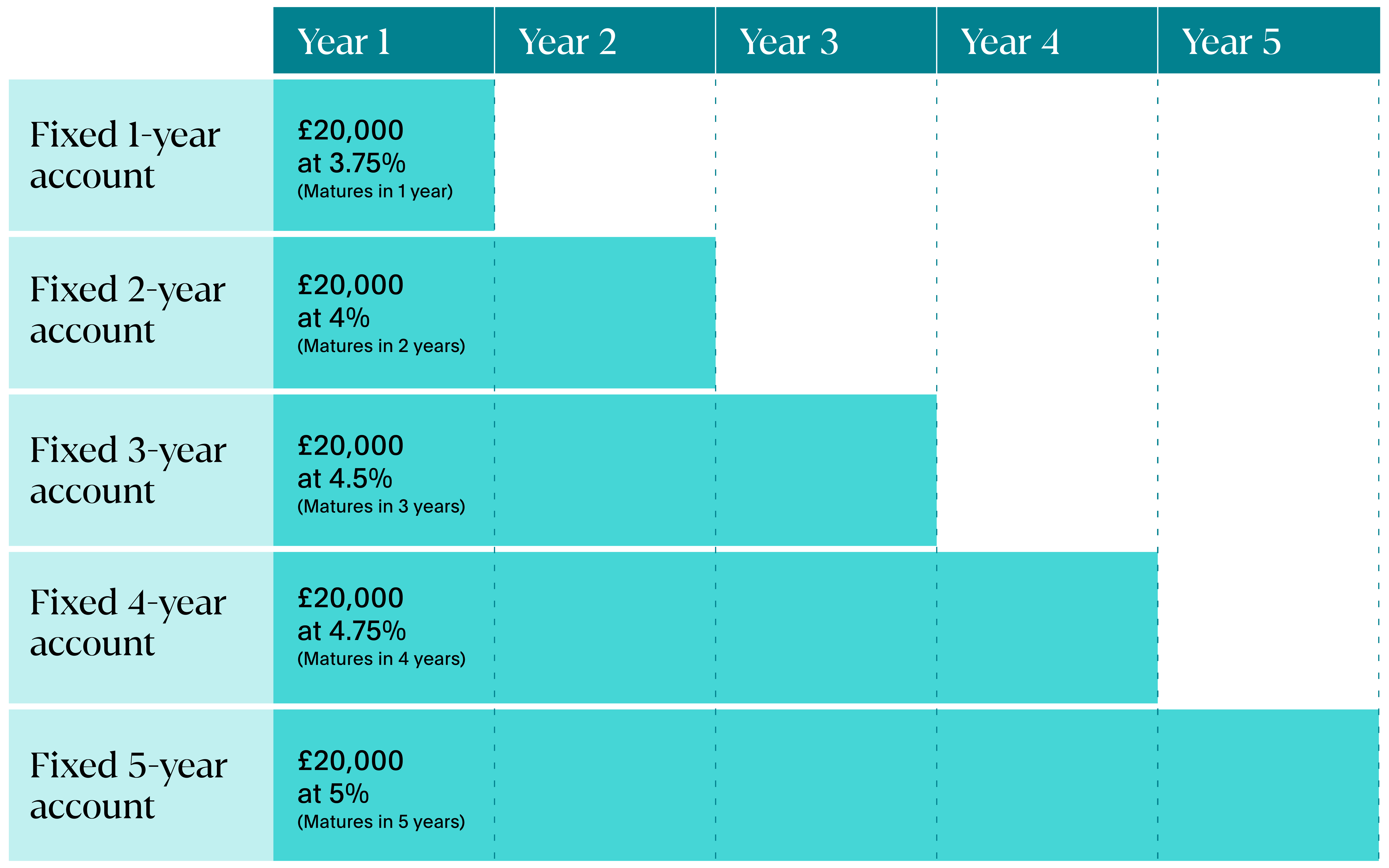
This approach is sometimes known as a ‘savings ladder’. Laddering involves spreading cash across accounts that mature at different times. By mixing Instant Access, Notice, and Fixed Term accounts, you can keep money available for emergencies while locking in higher rates.
Here’s an example of how investing £100,000 could work over five years.
Protecting the proceeds from your house sale
When a lump sum lands in your account, understanding how it's protected can become just as important as deciding where to keep it.
All eligible deposits benefit from Financial Services Compensation Scheme (FSCS) protection of up to £120,000 (per eligible person, per banking group). But the sale of your main home works differently.
If you've recently sold your home, the FSCS can provide additional temporary protection of up to £1.4m for six months. This is known as ‘temporary high balance protection’ and covers sums held after a major life event, such as selling a home.
The protection starts when the money becomes legally yours or is paid into your account. Moving the money to another bank does not restart the six months.
Whatever comes next, your cash comes first
Whether the money is destined for another property purchase or set aside for future plans, taking a little time to consider where it's held can make a meaningful difference.
We make it easy to prepare for whatever's next. With access to 450+ high-interest savings accounts from over 65 banks, you can compare, move, and track savings performance – all in one platform.
Frequently asked questions about what to do with money from selling a house
1. Where should I put money from a house sale in the short term?
It comes down to how soon you're likely to use the money. An Instant Access savings account offers flexibility for funds you plan to use in the short-term. A Notice account or Fixed Term account may be worth considering for balances that you do not need straight away, potentially allowing you to earn a higher return on your cash.
2. How long is money from a house sale protected?
Money from the sale of your home may qualify for FSCS protection for up to six months, with cover of up to £1.4m. The six-month period usually starts when the money legally becomes yours or is paid into your account.
After six months, the standard FSCS protection limit applies, which currently covers up to £120,000 (per eligible person, per banking group).

How Fliss and John managed their lump sum
When Fliss and John downsized, protecting the house sale proceeds was one of their main concerns. They also wanted to keep their money flexible while considering what their next chapter might look like.