Divorce is one of the most significant emotional and financial moments a person can experience. And ONS data shows it’s increasingly happening at a later stage in life – common enough to earn its own label: ‘silver separators’.
For people separating after the age of 50, it can mean navigating a completely different financial future. Often, this is at a point in life when there is less time to rebuild savings or rethink retirement plans. And for many, the biggest financial decision starts with what happens to the value tied up in the family home.
To better understand how this group navigates life after selling a home following divorce or separation, we surveyed 500 UK adults. The findings reveal how much they received, where they kept the money, and what decisions came next.
How much do people receive from a house sale?
Among those surveyed, the average amount personally received from the sale of a home as part of a divorce or separation was £154,302. Across the sample:
● 39% received from £25,000 to £99,999
● 56% received £100,000 or more
● 24% received £200,000 or more
Yet for many, deciding what to do with that money – or where to keep it – is far from straightforward.
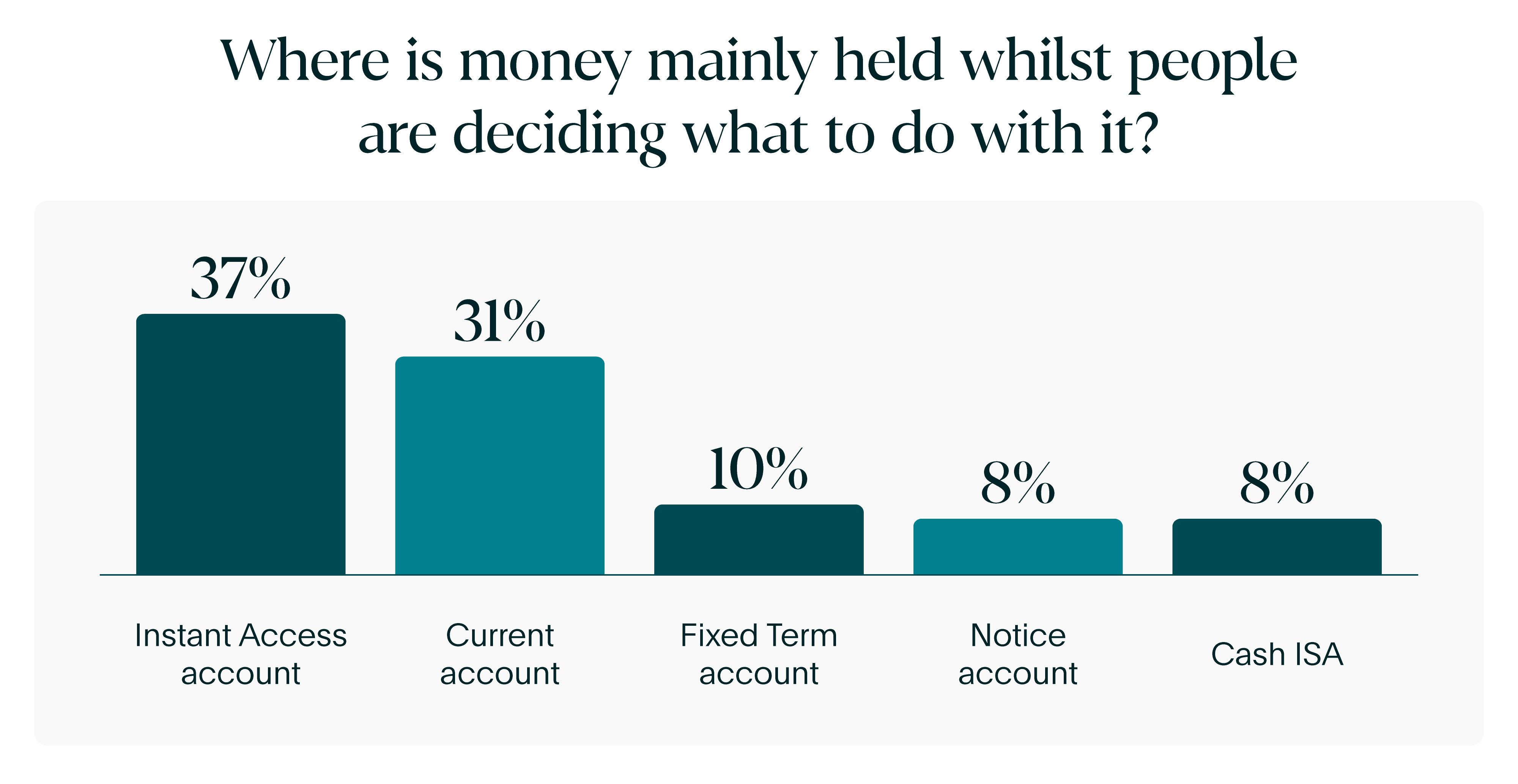
Many people chose convenience and accessibility while working out what they wanted to do next. The most common place to put their lump sum was in an Instant Access savings account – 37% of respondents chose this. Elsewhere:
● almost a third (31%) said they kept their money in a current account
● 10% of respondents used a Fixed Term savings account
● 8% used a Notice savings account
Current accounts often pay little or no interest on cash balances, meaning some savers earn less than they could in other types of savings accounts.
For example, placing a £154,000 sum in a one-year Fixed Term savings account paying 4.8% AER could generate around £7,400 in interest before tax.
How long until people decide where the money goes?
For many respondents, there was no delay at all. Almost half (47%) had decided what to do with the proceeds by the time the sale completed.
But for those who had not yet made up their mind, the decision often took time. Among respondents who were still weighing up their options, it took an average of just over five months to decide what to do with the money.
Nearly one in five (19%) took between 4 and 12 months to decide what to do with the proceeds.
Emotional upheaval often delays major financial decisions
For many respondents, the delay reflects the emotional realities of divorce or separation, rather than indecision around how to invest the money itself.
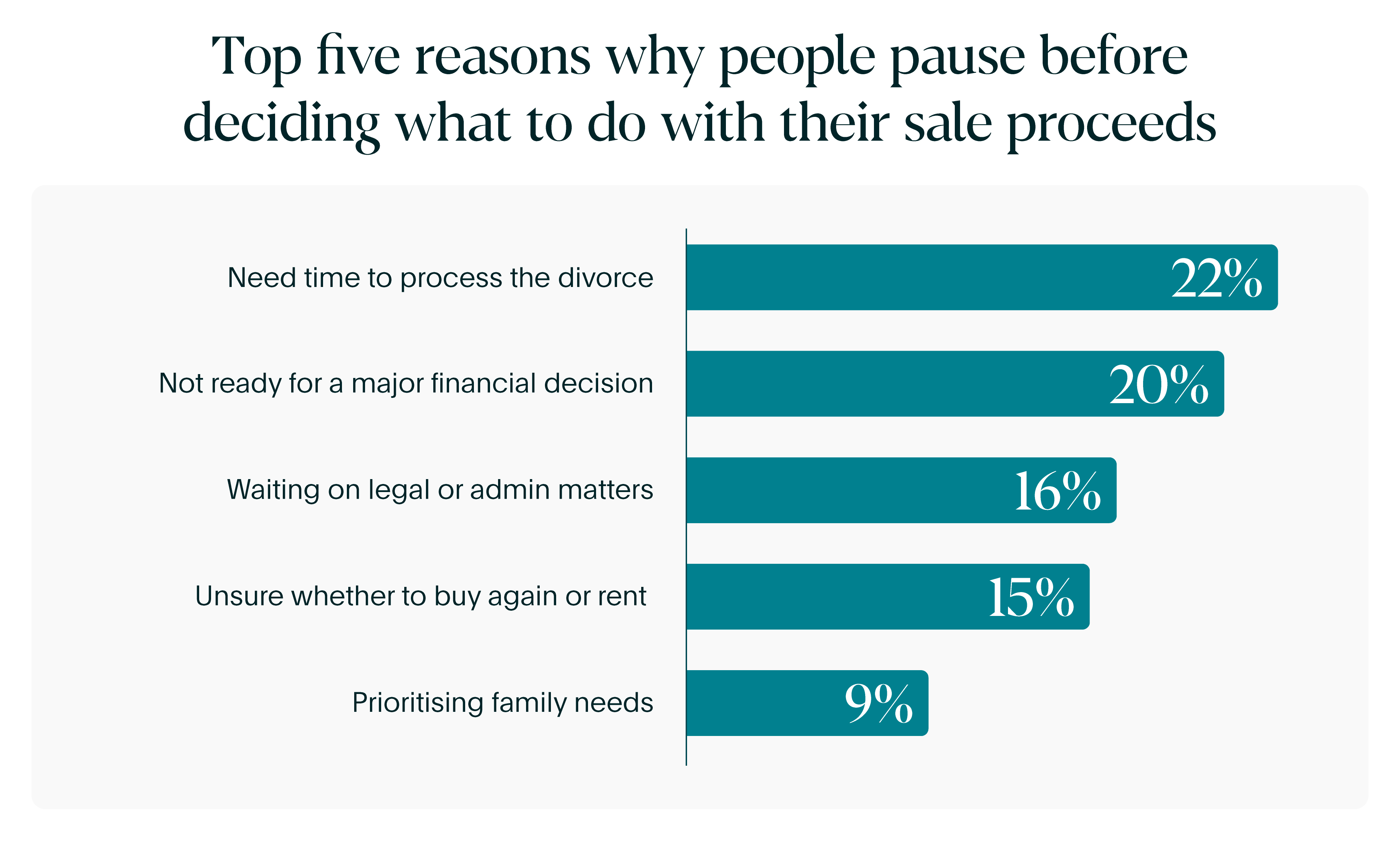
It's understandable to take time before making a major financial decision. But if you're holding a large cash balance for several months, where you keep it matters. It can affect both the interest you earn and how your money is protected.
How much of your cash is protected?
If you're holding a large amount of cash, it's important to understand how much of it is protected if your bank or building society were to go out of business.
The Financial Services Compensation Scheme (FSCS) protects eligible cash deposits of up to £120,000 per person, per bank group (or £240,000 for joint accounts).
Certain life events, including the sale of your home, may qualify for temporary high balance protection of up to £1.4m for six months.
But while 58% of respondents said they were fully aware of protection limits, just 22% had heard of them but did not know the details. A further 19% were not aware of them at all.
Given the average amount received was £154,302, understanding how FSCS protection applies can be particularly important when holding a large lump sum.
What the next chapter looks like
For the majority of those surveyed, starting over does not have to mean starting somewhere completely new.
● 65% stayed in the same area
● 33% moved elsewhere in the UK
● 2% moved abroad
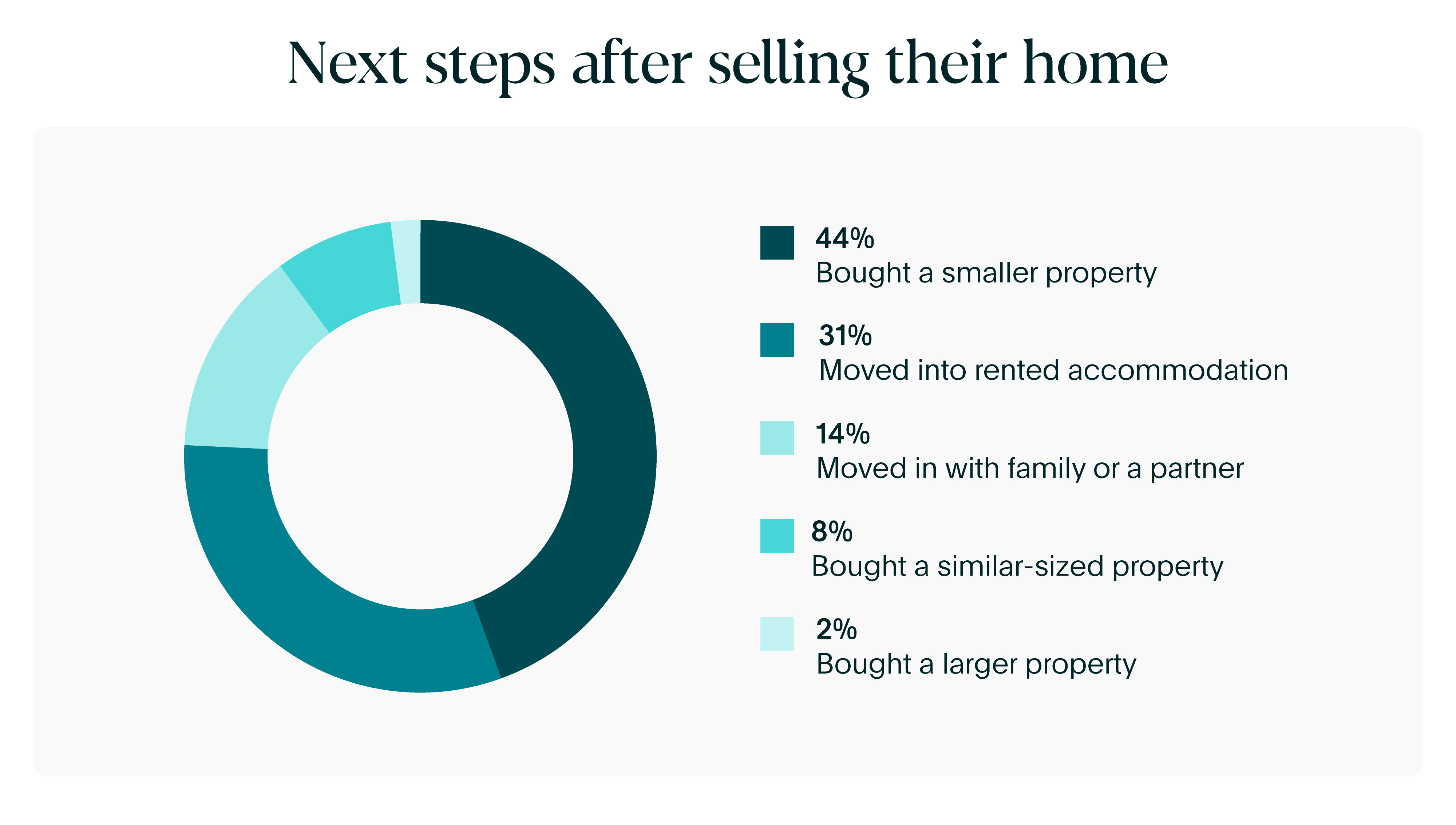
Downsizing was the most common next step, with 44% moving to a smaller property after selling their home. But the findings show there is no single path after later-life divorce. 31% moved into rented accommodation, while 14% moved in with family or a partner.
Less than 2% of all new-build properties are bungalows, compared to 11% in 1990, highlighting some of the challenges older movers can face when looking to downsize.
Making the most of your house sale settlement
Our research shows that silver separators need time before making major financial decisions following divorce or separation. But even if the money's long-term purpose isn't yet clear, it's worth considering where it's held in the meantime.
For those holding a large cash balance while weighing up their next move, savings platforms such as Flagstone can make it easier to spread cash across multiple accounts, access competitive rates, and manage savings – all in one place.
Use our interest calculator to see how your cash could grow.
Methodology
We surveyed 500 UK adults aged 50+ who have divorced or separated in the last five years and sold their home (receiving money from the sale) as part of the settlement. Fieldwork ran from 29 July to 5 August 2026. Respondents were asked:
Q1. Approximately how much did you personally receive from the sale of your home as part of your divorce or separation?
Q2a. Approximately how long, if at all, after the sale of your home was completed, did you decide what to do with the proceeds?
Q2b. What, if anything, was the primary reason for waiting at least 1 month before deciding what to do with the money? *Respondents who waited at least 1 month before deciding what to do with the money
Q3. Where was most of the money initially held during the period between receiving your share of the home-sale proceeds and using it for its long-term purpose?
Q4. Before receiving your sale proceeds, were you aware there may be limits to how much of your money is protected if held with a single bank or provider?
Q5. What best describes what you did about housing after selling your home?
Q5b. After selling your home, did you stay in the same area or move to a different area?
● ‘Prefer not to say’ responses were excluded from the average-amount calculations.