The asset awareness gap: are you underestimating your Inheritance Tax bill?
Many homeowners are underestimating their Inheritance Tax exposure. Our latest research explores why, and what this could mean for your estate.
This article is not advice. If you would like to receive advice on your savings and investments, consider speaking to a Financial Adviser.

Inheritance Tax receipts are at a record high and are forecast to reach £15bn by 2030-31.
But a new study from Flagstone found that many people haven’t worked out how much Inheritance Tax could be due on their estate.
Our research found that 70% of UK homeowners who are likely to face Inheritance Tax have never calculated their potential liability. Among those with estates over £1m, it’s 65%.
Rising property values, a frozen nil-rate band, and upcoming changes to how pensions are taxed mean more homeowners could be affected by Inheritance Tax than they realise.
We looked at how many homeowners know what their assets are worth, and what this could mean for the tax they might pay.
The asset awareness gap
Results show a clear disconnect between how people feel about their finances and what their assets are actually worth.
47% of homeowners described themselves as ‘just getting by’ financially. Women were more likely to say this (53%), compared with 40% of men.
Yet the average estimated estate value across all respondents is £410,252 – well above the current Inheritance Tax threshold of £325,000.
38% of respondents estimated their estates at £500,000 or more, while 13% placed their estates above £1m.
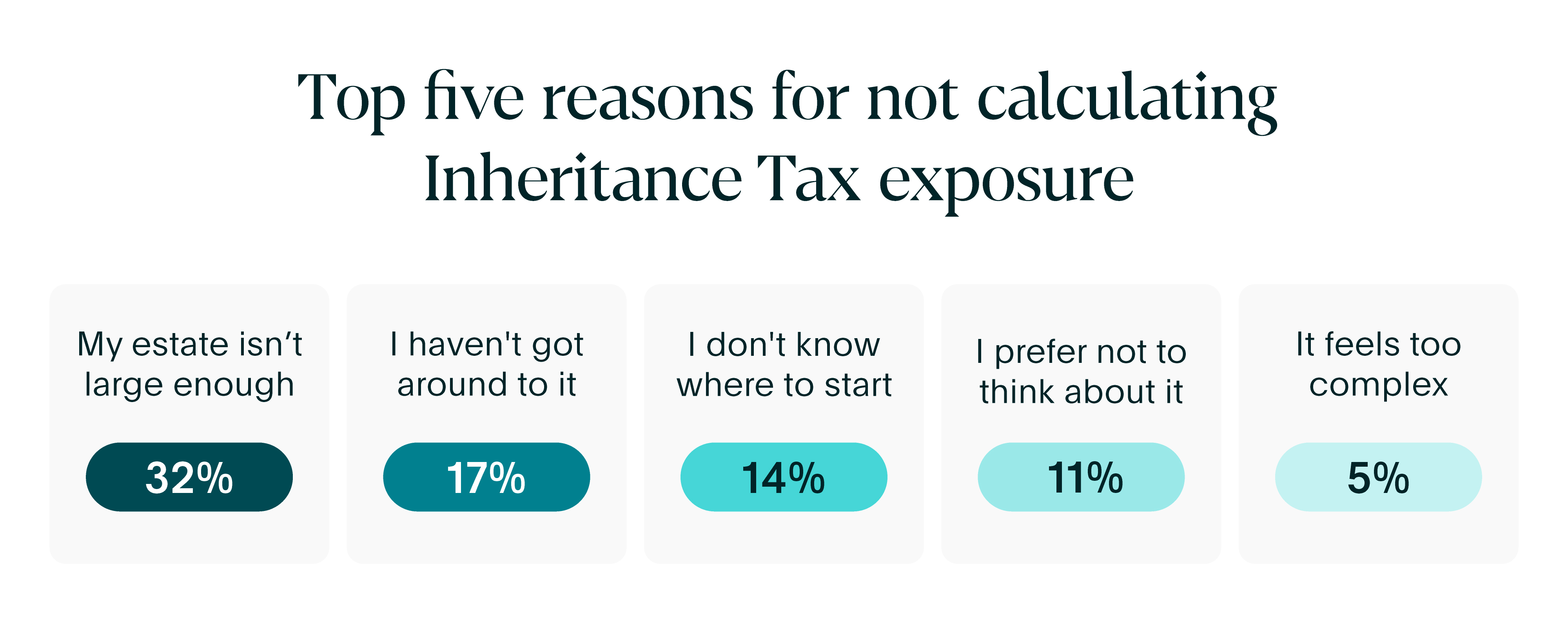
But most haven’t run the numbers at all. Over two-thirds (70%) of homeowners whose estates could exceed the threshold haven’t worked out what they’re likely to owe.
Who’s most exposed?
- Homeowners aged 45+ in regions where property values have climbed sharply.
- Anyone whose property has significantly increased in value since they last reviewed their estate.
- Those who haven’t revisited their estate plans recently – for example, where plans have been put in place but not revisited as life circumstances have changed.
What does this mean for homeowners and their families?
If your estate is above the threshold without you realising, it can create a number of challenges:
1. Unexpected costs
If your estate goes over the Inheritance Tax threshold, the amount over it could be taxed at 40%.
2. Property decisions
In some cases, property may need to be sold to pay an Inheritance Tax bill, as the tax is usually due before assets are passed on to beneficiaries.
3. Probate delays
If there’s more Inheritance Tax to pay than expected, it can delay probate, slowing down how quickly assets can be passed on to your family.
4. A smaller inheritance
Tax can reduce the value passed on to beneficiaries, meaning they might receive less than expected. This is particularly relevant for the 24% of people who say their first priority after receiving an inheritance would be to buy property.
Plan ahead, protect your inheritance
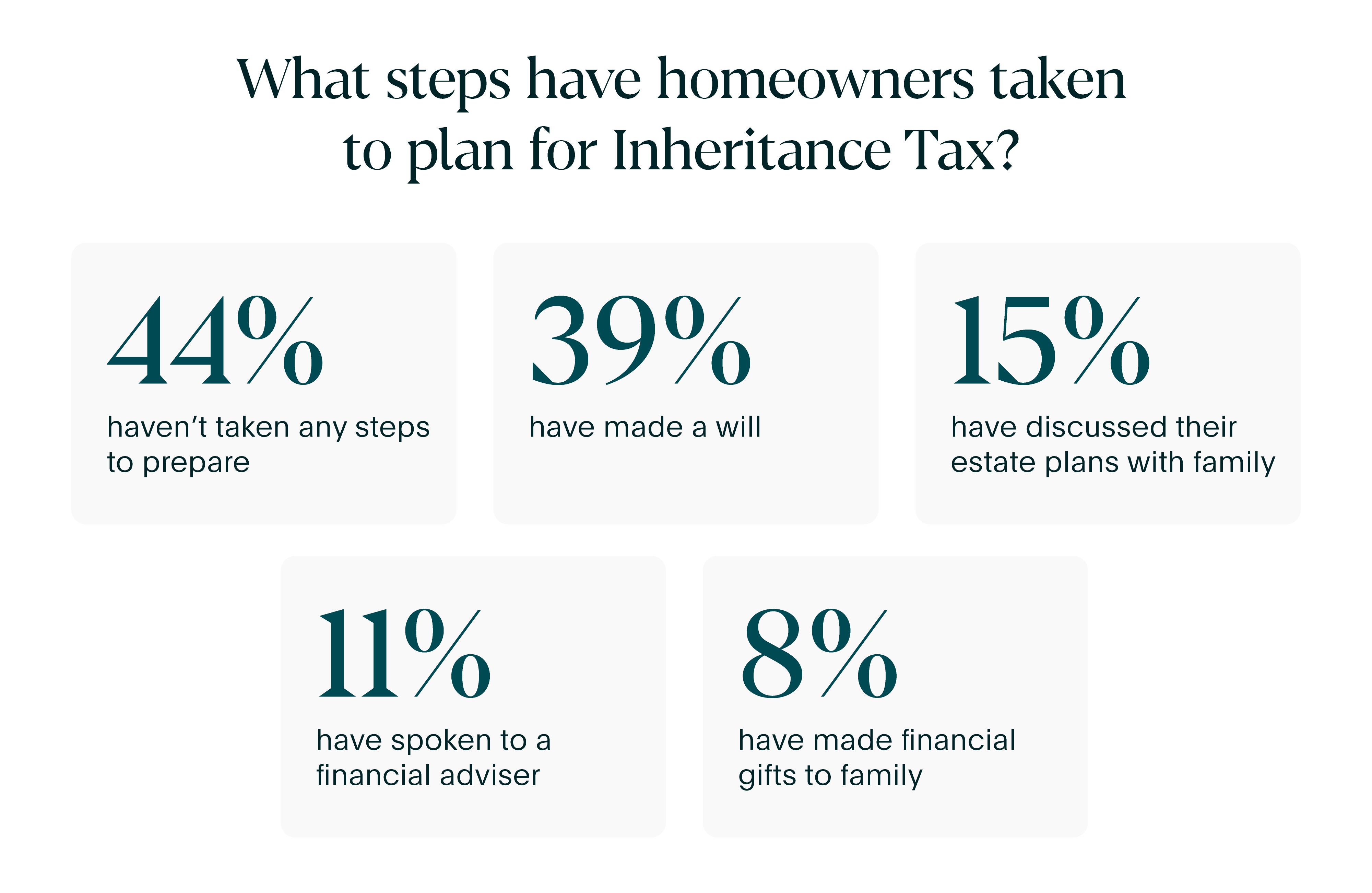
44% of respondents say they haven’t taken any steps to plan for Inheritance Tax. Not keeping track of your estate’s value, or tax rule changes, can lead to unexpected outcomes later on.
Simple tools like an Inheritance Tax calculator can help you estimate how much tax could be due on your estate.

Methodology
The research was conducted by Censuswide on behalf of Flagstone, surveying 2,000 UK homeowners aged 45+.
Survey participants were asked:
- How would you describe your view on your current financial position?
- The approximate total value of their personal assets across property, savings/investments, life insurance/death benefit, business equity, and possessions.
- Whether they had calculated their current IHT exposure.
- What steps, if any, they had taken to plan for IHT.
Total estate values were estimated by applying midpoint modelling across the five asset classes and summing the results.
The figures are deliberately conservative: the £1m–£1.99m band was modelled at £1.25m (below the true midpoint of £1.495m), the £2m–£4.99m band at £3m, and the £5m+ open-ended band at its £5m floor - meaning aggregate values for higher-wealth respondents are likely understated.
Responses of "Prefer not to say" or "Don't know" were treated as £0.