Rates on the rise: what it means for savers
The Bank of England has raised the base rate to 4% as inflation rises again. We explain why rates have gone up and what the change could mean for your savings.
This article is not advice. If you would like to receive advice on your savings and investments, consider speaking to a Financial Adviser.



Bank of England base rate: at a glance
The Bank of England has raised the base rate from 3.75% to 4%.
The Monetary Policy Committee (MPC) voted 8-1 in favour of the decision.
UK inflation rose to 3.5% in September, moving further above the Bank's 2% target.
Higher energy prices are still one of the main reasons prices are rising.
For savers, a higher base rate often supports more competitive savings rates.
The next Bank of England base rate decision is on 17 December 2026.
The Bank of England has hiked the base rate by 0.25 percentage points to 4% – its first increase since August 2023.
The decision follows six consecutive meetings at which the MPC held the base rate at 3.75%. At the Bank's previous meeting in September, the MPC voted 6-3 to hold rates steady, with three members already voting for an increase to 4%.
But at today’s meeting the outcome was almost unanimous. The MPC voted by a majority of 8–1, with one member preferring to increase the base rate to 4.25%.
Unless the conflict in the Middle East is resolved, neither does it seem likely to be the last increase. The MPC will judge the outlook at each meeting, responding as necessary to bring inflation sustainably back to our 2% target.
Why did the Bank of England raise the base rate?
The Bank of England's main goal when setting the base rate is to keep inflation under control. Inflation rose for three consecutive months from July to September 2026, up to 3.5% – well above the Bank’s 2% target. That strengthened expectations that the Bank would increase the base rate in November.
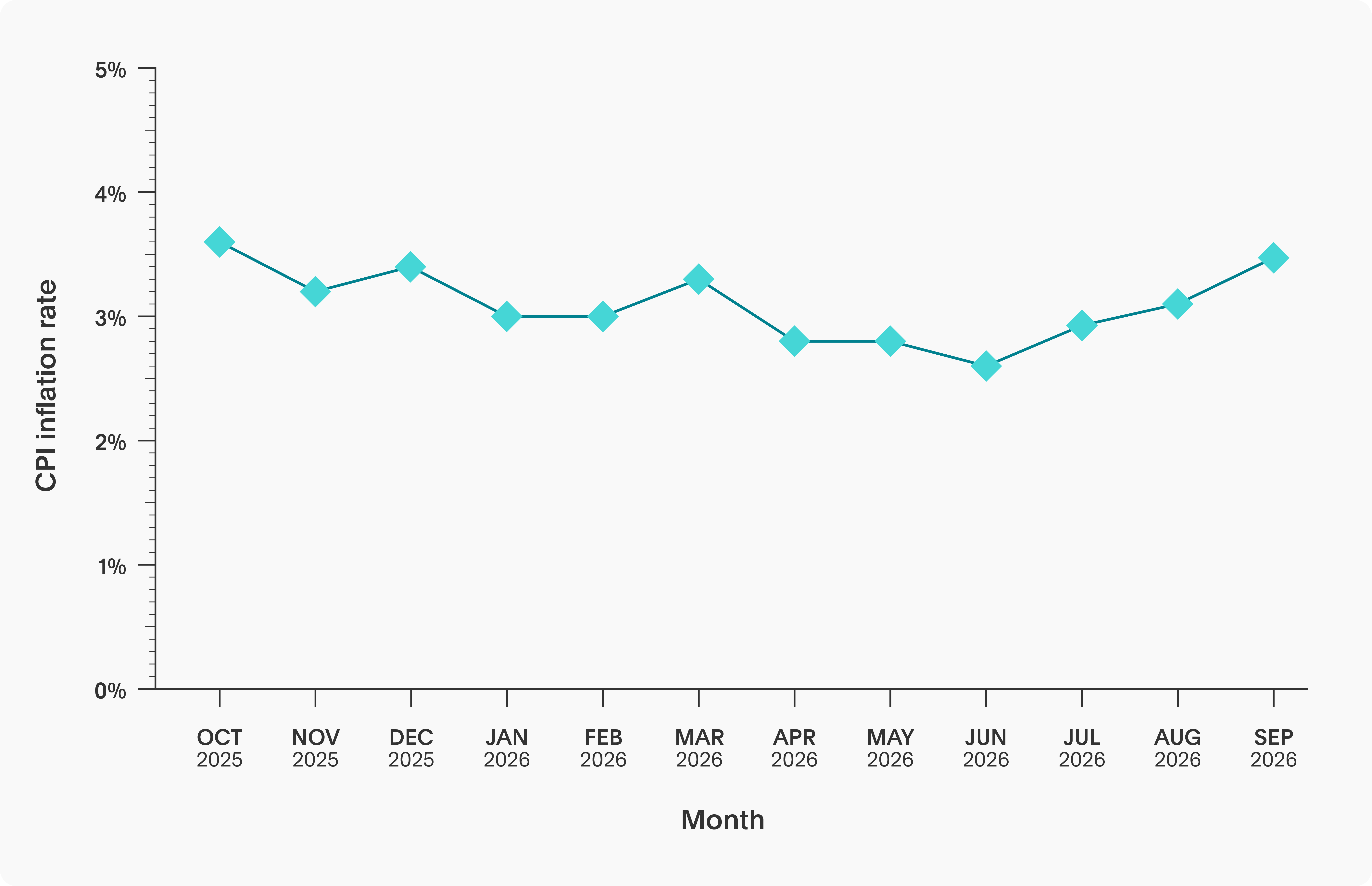
Higher energy costs can keep inflation above target. The conflict in the Middle East has disrupted energy supplies and pushed up prices. That can mean bigger fuel and energy bills, while businesses may pass higher costs on to customers.
In September, the Bank said there was little evidence so far of a significant effect on wages and other prices. But it warned that the longer energy prices stay high or unpredictable, the greater the risk that inflation stays high too.
Raising the base rate can help bring inflation back towards the Bank's 2% target. It usually makes borrowing more expensive and saving more attractive, encouraging people and businesses to spend less. When demand for goods and services falls, prices tend to rise more slowly.
What does a 4% base rate mean for savers?
For savers, a higher base rate can mean better returns.
Interest rates on savings accounts often move in the same direction as the base rate, encouraging banks to pay more to attract deposits. But each bank decides what rate it offers and when to change it.
A rise in the base rate does not necessarily mean the rate on your existing savings account will automatically increase. That's why it can pay to keep an eye on the rate you're earning and compare it with what's available elsewhere.
Any base rate change serves as a handy reminder to all savers that 'setting and forgetting' their savings doesn't yield the best results. Instead, savvy savers will review their accounts regularly to ensure they're getting the best value from their cash as market mood and rates move.
Could the base rate rise again?
The Bank has repeatedly said its decisions depend on how the economy develops, particularly inflation and the extent to which higher energy costs feed into other prices and wages.
Before today's announcement, financial markets were already expecting rates to move higher. Some market expectations suggested several further quarter-point increases could follow during 2027. But economists are less certain about the scale of further rises.
That means it's worth being cautious about treating any forecast as a certainty. The path of interest rates will depend on what happens to inflation, energy prices, economic growth, and the labour market over the coming months.
The Bank's next base rate decision is on 17 December 2026.
What should savers consider now?
A rising base rate environment makes it particularly important to know what your cash is earning.
If you've kept your savings in the same account for a while, the rate may no longer be competitive with newer products on the market. And while some providers may increase rates following today's decision, others may make smaller changes or none at all.
So it can be useful to:
Review your current rate: Check the interest rate you're earning and whether it has changed recently.
Compare what's available: Looking across the savings market can give you a useful benchmark for how competitive your savings account is.
Think about access: Consider how much of your money you may need in the short term before choosing between Instant Access and Fixed Term accounts.
Keep your rate on your radar: Savings rates can change quickly, particularly when the base rate is moving.
Cash without the complexity
When rates are changing, leaving your savings untouched can mean missing more competitive rates elsewhere.
With Flagstone, you can access hundreds of savings accounts from more than 65 banks, and compare, switch, and track your cash – all in one place.
This can make it easier to respond as the savings market changes, without having to open and manage accounts with multiple banks separately.
Bank of England base rate FAQs
What is the Bank of England base rate?
The base rate, also known as Bank Rate, is the UK's most important interest rate. The Bank of England’s Monetary Policy Committee sets it and it’s one of the tools they use to bring inflation back towards its 2% target.
What is the base rate today?
The Bank of England base rate is 4%, following a 0.25 percentage-point increase from 3.75%.
Why has the base rate gone up?
Inflation has moved further above the Bank of England's 2% target, reaching 3.5% in September. Higher and more volatile energy prices have also increased the risk that inflation remains elevated for longer.
Does a higher base rate mean better savings rates?
Not automatically. Savings rates often move in the same direction as the base rate, but individual banks decide whether, when, and by how much to change the rates they offer.
When is the next Bank of England interest rate decision?
The Monetary Policy Committee makes its next decision on 17 December 2026.