Autumn Budget 2026: four areas businesses should watch
With costs squeezing Britain’s businesses, all eyes are on the Budget. Will the Chancellor deliver the relief SMEs hope, or will firms have to find their own ways to build financial resilience?
This article is not advice. If you would like to receive advice on your business' cash reserves, consider speaking to a Financial Adviser.

With just a week to go until the Autumn Budget, the pressure is mounting on Chancellor John Healey to deliver an economic reset. For Prime Minister Andy Burnham, the 28 October statement will be the first major test of his promise to put growth and regional prosperity at the heart of government.
But political ambition is running up against some uncomfortable economic realities: rising borrowing costs, stubborn inflation, higher energy prices, and competing demands on the public purse.
Many Britain’s small and medium-sized enterprises (SMEs) are already grappling with rising costs and squeezed margins. The question is whether this Budget will offer meaningful relief, or simply more promises of growth further down the line.
What SMEs want from the Budget
The scale of the challenge is clear. Flagstone’s Business Barometer shows that 43% of SMEs doubt they can continue as they are for more than two years if today’s financial pressures persist.
Businesses have spent the past decade navigating Brexit, the pandemic, inflation, and successive energy shocks. Now, higher employment costs and economic uncertainty are making it harder to plan, recruit, and invest.
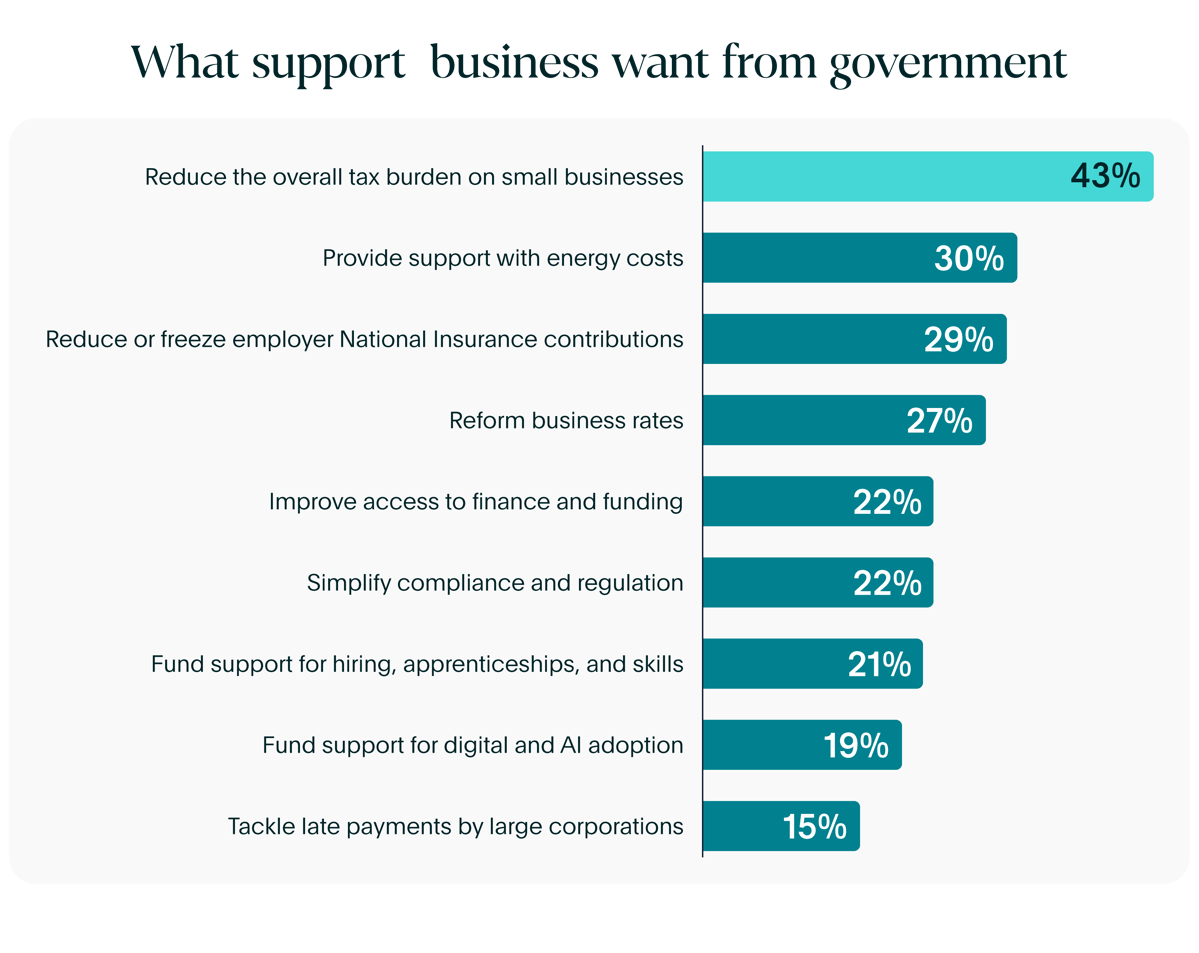
Yet the appetite for growth remains. Flagstone’s research suggests that if current pressures eased, businesses would be looking to hire, invest in technology and equipment, and expand into new markets. The ambition and will are there – what's needed is greater certainty and confidence to make those decisions.
Four things businesses should watch for on Budget day
1. Business taxes and employment costs
With the Chancellor under pressure to raise revenue, businesses will be watching closely for any relief on employment costs. In April 2025 employer National Insurance contributions rose from 13.8% to 15%. The earnings threshold also fell from £9,100 to £5,000. That’s added significantly to wage bills, particularly for labour-intensive sectors such as retail and hospitality.
Business groups are now calling for some of that burden to be reversed. The Confederation of British Industry (CBI) wants the threshold raised to £6,000, estimating that this could help create 41,000 jobs, particularly for younger and entry-level workers.
Family Business UK has separately proposed a six-month National Insurance holiday for family businesses that hire people aged 18 to 24, or first-time employees up to 30.
There's also pressure to make hiring younger workers cheaper, as rising wage bills and payroll taxes weigh on recruitment. For SMEs operating on thin margins, even modest increases in costs can influence decisions about hiring, investment, and expansion. The question is whether the Chancellor can offer businesses some breathing space without putting further strain on the public finances.
2. Could a tax on banks hit business lending?
One potential revenue raiser is an increase in the banking surcharge. Banks have enjoyed substantial profits as interest rates have remained elevated. That’s prompted speculation that Chancellor Healey could raise the extra tax on bank profits above £100m from 3% to 8%.
The government originally introduced the surcharge on banking companies at 8% in 2016, then cut it to 3% in 2023, partly to offset a rise in corporation tax. On paper, taxing profitable banks to help fund support for struggling households may look appealing. But there could be unintended consequences for businesses.
Some analysts have warned that banks could pass on some of the additional cost through slightly more expensive loans and lower interest rates on deposits. For SMEs already facing tight lending conditions, that could make borrowing to fund expansion, equipment, or working capital more expensive.
Against this backdrop, how businesses manage their cash becomes even more important. If borrowing becomes more expensive and returns on deposits come under pressure, making the most of existing cash reserves could give firms more room to absorb rising costs.
That could mean keeping enough money accessible to meet day-to-day costs, while ensuring surplus funds are earning interest rather than sitting idle in low-interest accounts.
Discover our business savings accounts
<h3> 3. Energy costs and inflation </h3>
Energy remains a significant concern, particularly for manufacturers, hospitality
businesses and other energy-intensive sectors. Renewed pressure on global energy
prices has complicated the inflation outlook and squeezed the Chancellor’s room for
manoeuvre.
3. Energy costs and inflation
Energy remains a significant concern, particularly for manufacturers, hospitality businesses and other energy-intensive sectors. Renewed pressure on global energy prices has complicated the inflation outlook and squeezed the Chancellor’s room for manoeuvre.
Businesses will be looking for measures to contain costs, alongside greater clarity over longer-term energy policy.
The latest inflation, labour market, and public borrowing figures will also help shape the final Budget calculations. Ultimately, the Chancellor’s spending power will depend on the Office for Budget Responsibility’s updated forecasts.
4. Devolution and regional growth
Prime Minister Burnham has made shifting economic power away from Westminster central to his agenda. So, the Chancellor has promised a Budget that moves money and decision-making closer to communities.
But what does that mean for a small business in Manchester, Birmingham, or Newcastle? Better infrastructure, access to skills, and more local investment could make a meaningful difference.
The government has confirmed plans to let local authorities and mayors retain more revenue from business rates from April 2027. Mayors will also receive a share of locally generated income tax from April 2028, replacing some of the grants they currently get from central government. A fiscal devolution roadmap, expected alongside the Budget, should provide more detail on how the system will work in practice.
Can the Chancellor deliver?
Supporting growth, easing financial pressures, and reassuring investors that the public finances remain under control is no easy task.
Chancellor John Healey has little room to spare. Higher gilt yields have increased the cost of servicing government debt, while inflation and defence commitments compete for limited resources.
SMEs hoping for sweeping tax cuts or generous support packages, may need to temper their expectations. The real test will be whether the Budget gives businesses enough certainty to start making longer-term decisions.
What can you do ahead of the Budget?
No business can control tax policy, interest rates, or global energy prices, but you can control how you manage your company’s cash. The Budget is a useful prompt to review cash flow forecasts, upcoming liabilities, and the reserves available to absorb unexpected costs.
It’s also worth asking where your surplus cash sits and what it’s earning. Money held for future investment or as a financial buffer could earn interest rather than sit idle in a low-paying business current account. Separating cash into operating, buffer, and strategic reserves can help you balance access with longer-term returns.
Whatever the Chancellor announces on 28 October, businesses with a clear picture of their finances will be better placed to respond. The Budget may change the economic landscape, but financial resilience remains something businesses can build for themselves.
Build high-yield cash reserves with Flagstone
Spread, protect, and grow your company's cash with Flagstone. Access 50+ FCA-regulated banks and hundreds of savings accounts, all with one sign-up and a minimum deposit of £100,000.