Contents


This report is not advice. If you would like to receive advice on your cash, consider speaking to a financial adviser.
The cash performance gap report
New research from Flagstone reveals a hidden performance gap between UK SMEs that actively manage their cash and those that don’t. Is your cash management approach holding you back?

In partnership with the Centre for Economics and Business Research (Cebr) and Yonder Data Solutions.


Cash as a strategic asset
Proactive financial planning is even more essential in 2026, as economic uncertainty continues to define the outlook for UK SMEs. With rising costs, slow growth, and a turbulent geopolitical landscape, finance leaders are under increasing pressure to do more with existing resources – and to find performance gains in places that may have been previously overlooked.
We wanted to better understand one of those areas: how UK SMEs are managing their cash. Despite its potential to contribute to returns, cash is often treated as a static resource rather than an active lever for performance.
The results are surprising: our research shows that 72% of organisations leave their cash idle, potentially leaving significant returns on the table compared with those that take a more active approach.
Static cash left to sit in low-interest accounts isn’t neutral; it’s underperformance. Our goal with this report is to provide you with fresh insights on the opportunities cash presents – and the difference it can make when treated like a growth asset. We hope you enjoy reading it.
Arman Tahmassebi, Flagstone CEO.
Key findings
28%
Only 28% of SMEs actively manage their cash reserves. The remaining 72% leave their surplus cash idle.
£18,000
Firms that don’t actively manage surplus cash could lose up to £18,000 a year in missed returns compared with those that do.
64%
Nearly two-thirds of organisations (64%) hold surplus cash in current accounts, which typically offer low or near-zero returns.
77%
77% of organisations have considered moving surplus cash to alternative accounts or financial products to earn better returns.
24%
However, only 24% have moved surplus cash to higher-yield options. The remaining 53% have not yet acted.
40%
40% say preference for liquidity is the top reason for not moving cash to higher-yield solutions, followed by lack of time (27%), and perceived difficulty (25%).
CHAPTER ONE
The financial cost of business savings inertia

Fewer than 3 in 10 SMEs actively manage their surplus cash
Most UK SMEs aren’t making the most of their cash. Only 28% of organisations take a fully proactive approach to cash management. 28% are partially active, while 44% adopt a passive approach.
Proactive cash management remains the exception rather than the norm. While a minority actively monitor and deploy surplus cash to optimise yield, maintain liquidity, and protect funds, most do so only partially or not at all.
Definitions of surplus cash and active, partially active, and passive cash management are provided in the methodology section.
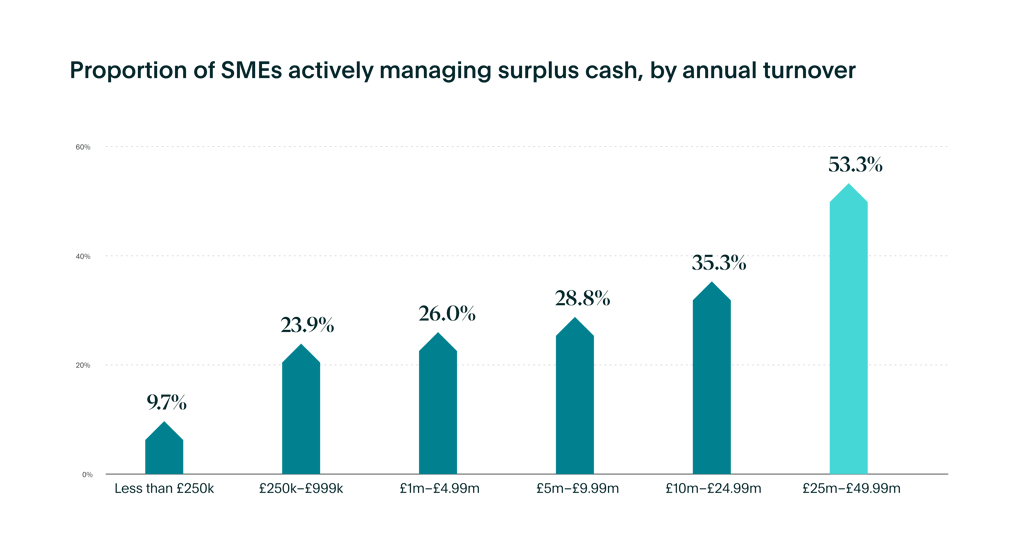
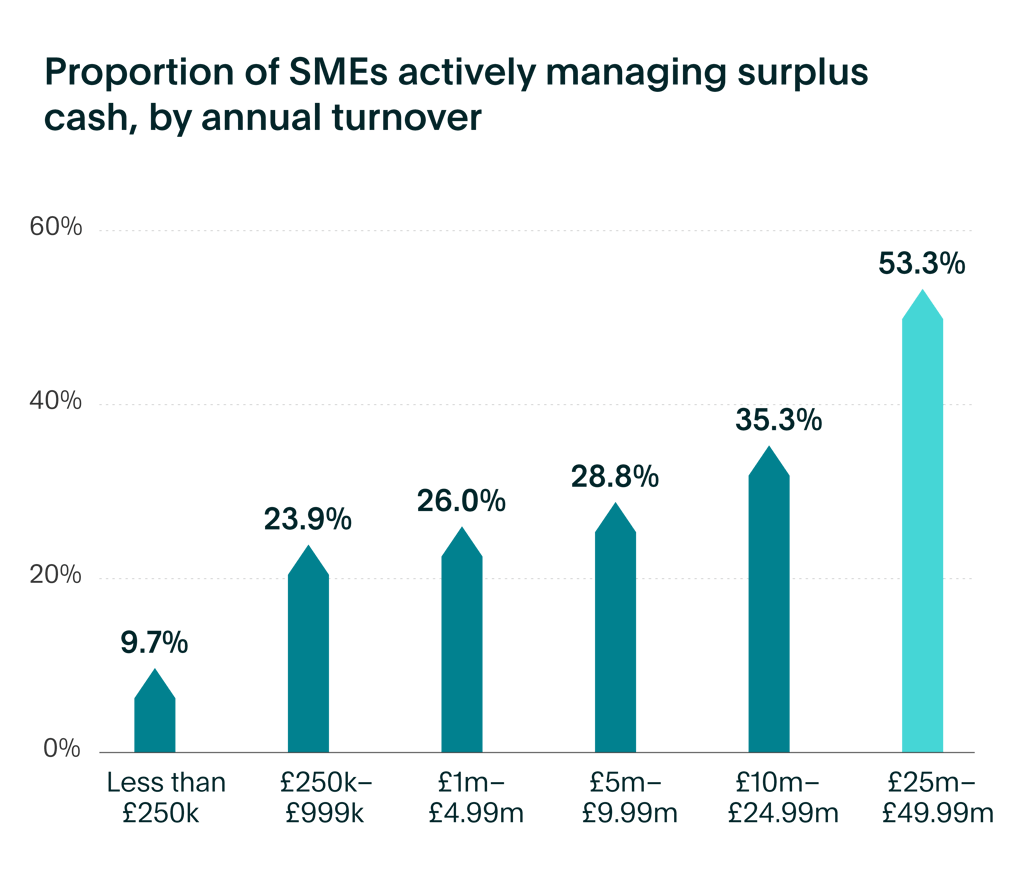
Active cash management increases sharply with firm turnover
Larger firms are far more active with their cash, while smaller firms often leave cash idle. Just under 10% of SMEs with an annual turnover of less than £250,000 actively manage surplus cash, compared with over 50% of those with over £25m.
This pattern likely reflects differences in resources. Larger firms usually have dedicated finance functions and more structured processes, while smaller firms often work with leaner teams, which can make active cash management more challenging.
The good news is that advances in financial technology are lowering the barriers to active cash management. From cloud accounting to savings platforms, firms of all sizes can now gain greater visibility and control over their cash with ease.
This means more organisations can manage cash more strategically and unlock its full potential.
More active cash management, higher returns
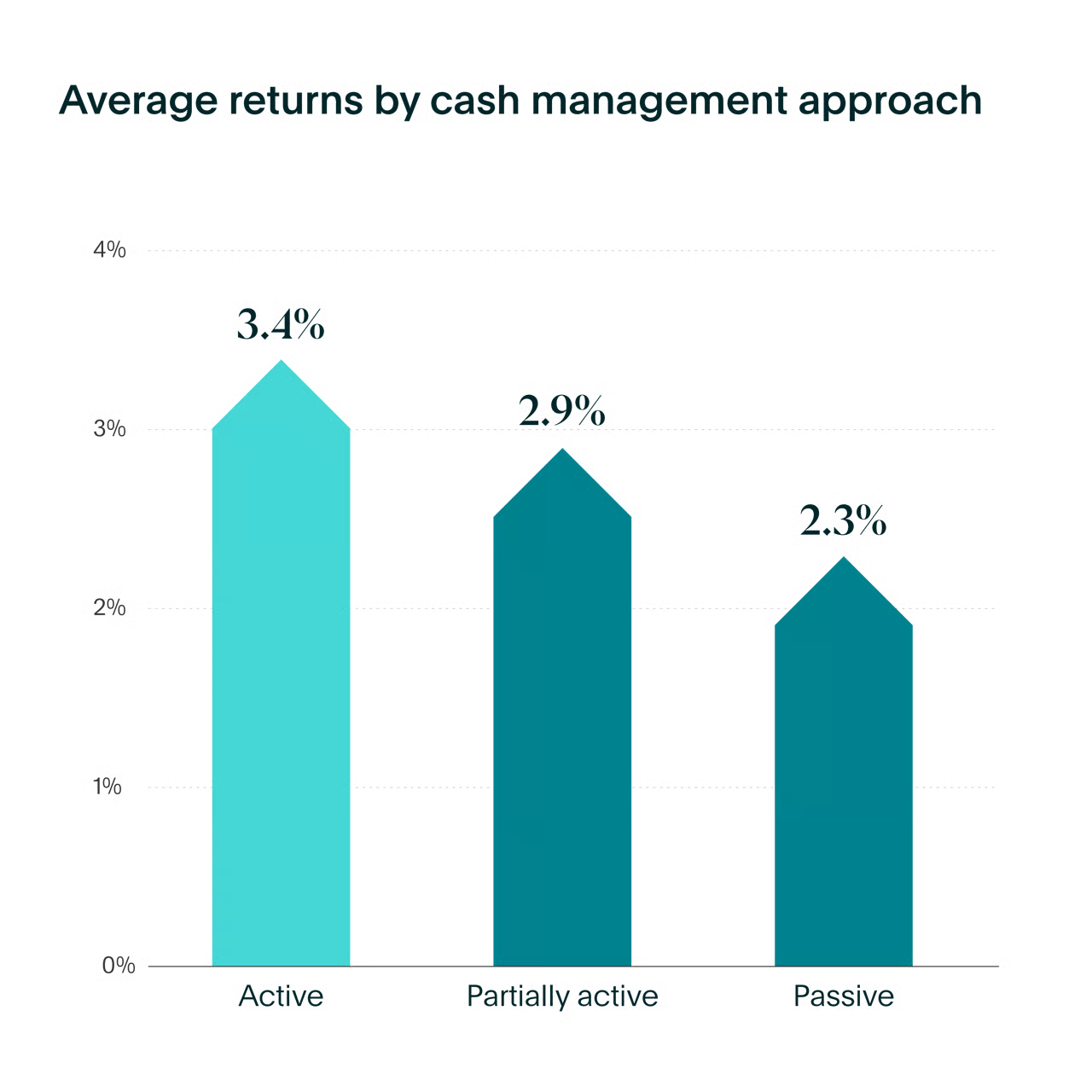
Actively managing surplus cash pays off. The study identifies a significant performance gap: organisations that actively manage surplus cash earn an average return of 3.4% on their deposits, compared to 2.3% when cash is managed passively. Firms with partially active practices earn an average of 2.9%*.
It’s not just the fully active companies that see results. Even small improvements in cash management can lead to better performance.
* Based on average interested rates reported by survey respondents in 2025.
Cash sitting still isn’t neutral. It’s costing businesses up to £18,000 a year in missed returns.
Cash isn’t just a buffer. When managed strategically, it becomes a lever for growth, resilience, and innovation. Is your cash strategy leaving value untapped?
Our research shows that passive savers are missing out on £18,000 a year in returns*, while partially active firms leave around £15,000 on the table. That’s money that could be reinvested in the business. For some organisations, this may mean investing in marketing to support growth. For others, it may be developing staff, upgrading equipment, or strengthening reserves to improve financial resilience.
Whatever your priorities may be, active cash management doesn’t just improve returns – it frees up resources that can directly support your business goals.
The gap holds true across firms of all sizes. This shows that the difference in performance is driven by how cash is managed, not just by how much cash a business holds. Even after adjusting for turnover – comparing firms on a like-for-like basis – passive firms still miss out on £14,000 per year on average.
* Calculated by comparing average returns across active, partially active, and passive SMEs (fewer than 250 employees, turnover under £50 million), using self-reported interest rates and economic modelling. See full methodology.
hover to reveal more




“I had a significant amount of cash sitting in my business account, but I wasn't earning any interest. The idea that I could place my cash into deposits and actually generate returns was a real turning point.”
Andy Beynon
Founder of Behind
Discover how restaurant owner Andy Beynon generates returns on fast-growing cash reserves, while keeping them secure.

CHAPTER TWO
A closer look at SME cash management behaviours
Just over half of SMEs have a formal cash management strategy
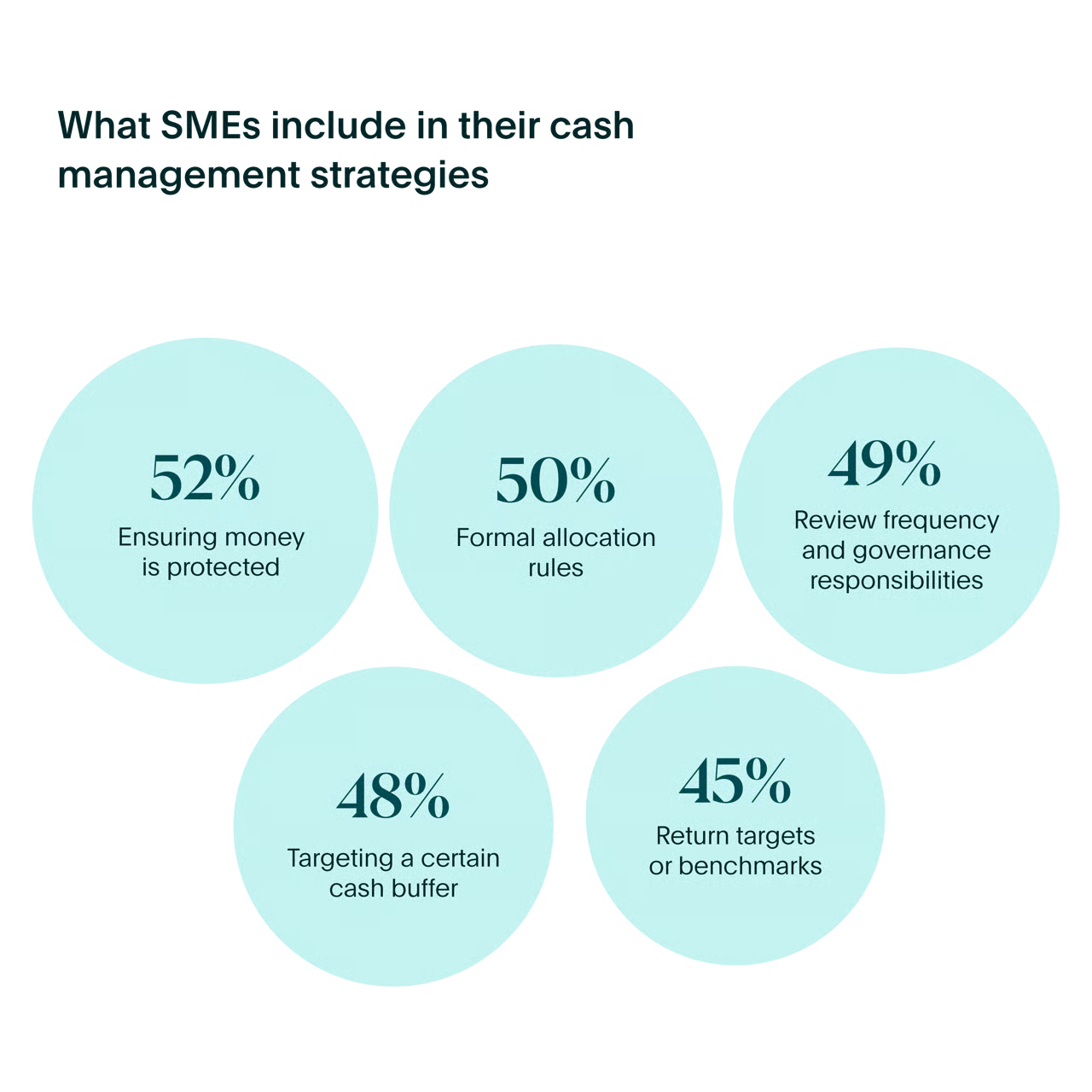
A clear cash management strategy is key to supporting day-to-day liquidity, protecting your balance, and improving returns. Yet just over half (53%) of SMEs have a documented strategy approved by management to monitor, allocate, and optimise cash holdings. This highlights a clear divide and indicates room for more structured cash management practices.
Among firms with a formal strategy, the focus is on deposit protection (52%), such as through Financial Services Compensation Scheme coverage. This is followed by formal allocation rules on how surplus cash is distributed between accounts or investment vehicles (50%).
Cash segmentation across operational, buffer, and strategic needs is widespread – but not yet optimised
70%
Hold cash for day-to-day activities, such as payroll and routine expenses.
55%
Hold funds to cover unexpected expenses or liquidity needs.
48%
Keep strategic cash for planned investments, acquisitions, or growth opportunities.
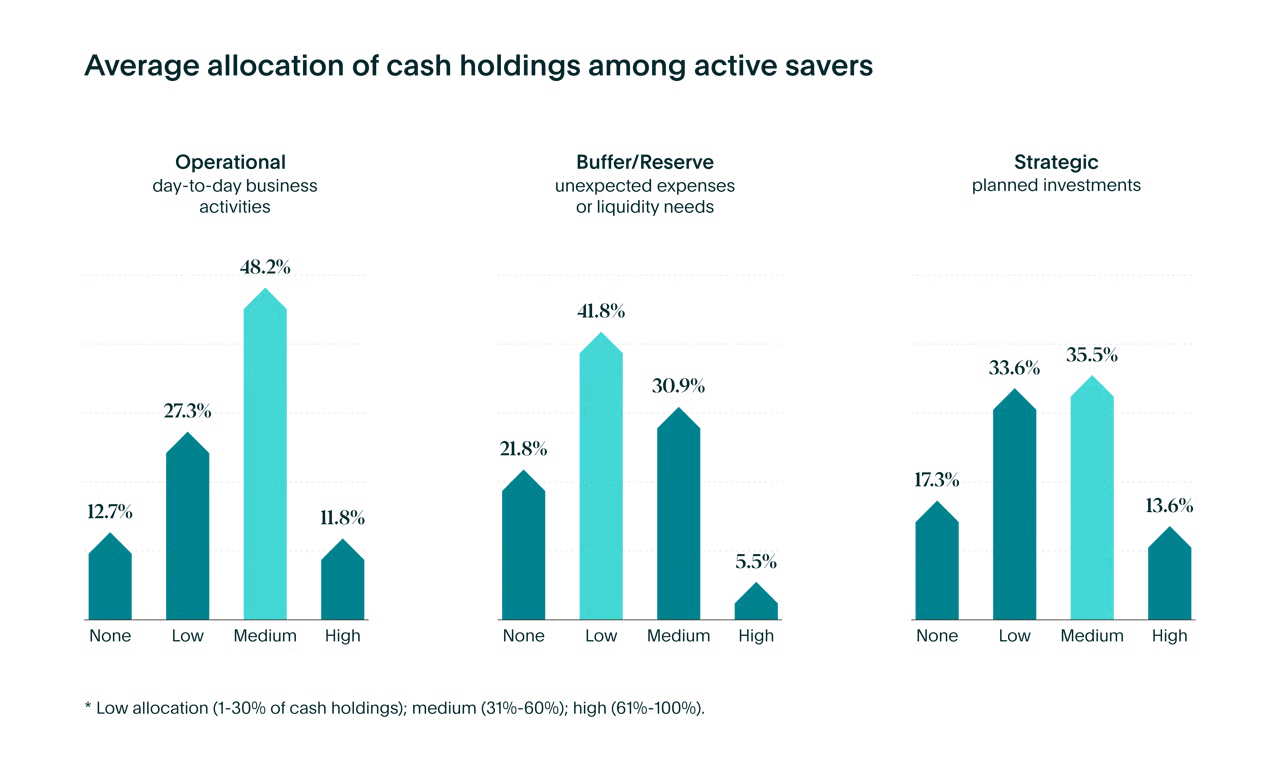
Cash is the lifeblood of every business. It keeps day-to-day operations running, acts as a buffer when the unexpected happens, and supports future investment and growth. Segmenting cash by purpose can ensure you have sufficient funds to cover these needs.
Our study shows that while cash segmentation is widely adopted, it remains primarily driven by operational needs rather than fully supporting resilience and long-term growth.
Most SMEs (90%) segment cash by use case. Of these, the majority (70%) hold cash for day-to-day activities. 55% maintain buffer reserves, while only 48% set aside funds for strategic initiatives.
When looking at how cash is allocated across each bucket, our research shows clear differences between active and passive organisations.
Active firms take a balanced and deliberate approach. They keep enough cash for day-to-day needs, set aside a sensible buffer for uncertainty, and retain flexibility for future investment or growth opportunities.
By contrast, passive organisations tend to be more uneven. Cash is mainly allocated to operational needs, with less set aside for unexpected costs or strategic plans. This keeps the business running smoothly, but limits flexibility to manage risk and pursue growth opportunities.
SMEs prefer to keep surplus cash easily accessible, often at the expense of higher returns
Most SMEs prioritise access to cash, even when that means holding funds in low-to-no yield accounts. Nearly two-thirds (64%) keep cash that isn’t needed for day-to-day operations in current accounts, despite the availability of higher-yielding instant access accounts. Current accounts typically offer little or no interest, often failing to keep pace with the inflation rate.
Cash offers safety, but if left idle, its value will likely erode over time. SMEs holding buffer and strategic cash could be missing out. These funds are unlikely to be needed immediately and could grow over time if placed in high-yield savings accounts.
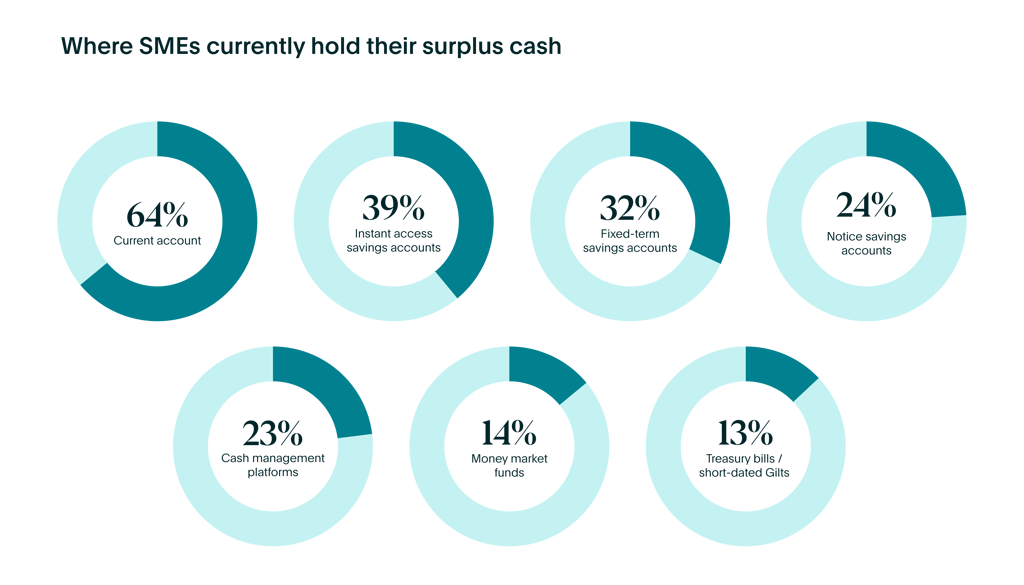
Even when organisations move money into higher-interest savings accounts, platforms, or financial products, easy access to funds remains the priority.
39% use instant access savings accounts, which typically offer slightly better returns without sacrificing liquidity. A smaller number choose fixed-term savings accounts (32%) and notice savings accounts (24%). These options normally offer higher interest rates than instant access accounts, but limit access to funds.
Government-backed bonds, such as Treasury bills and Gilts (13%), and money market funds (14%) remain niche choices, reinforcing that most SMEs prioritise flexibility over yield optimisation.
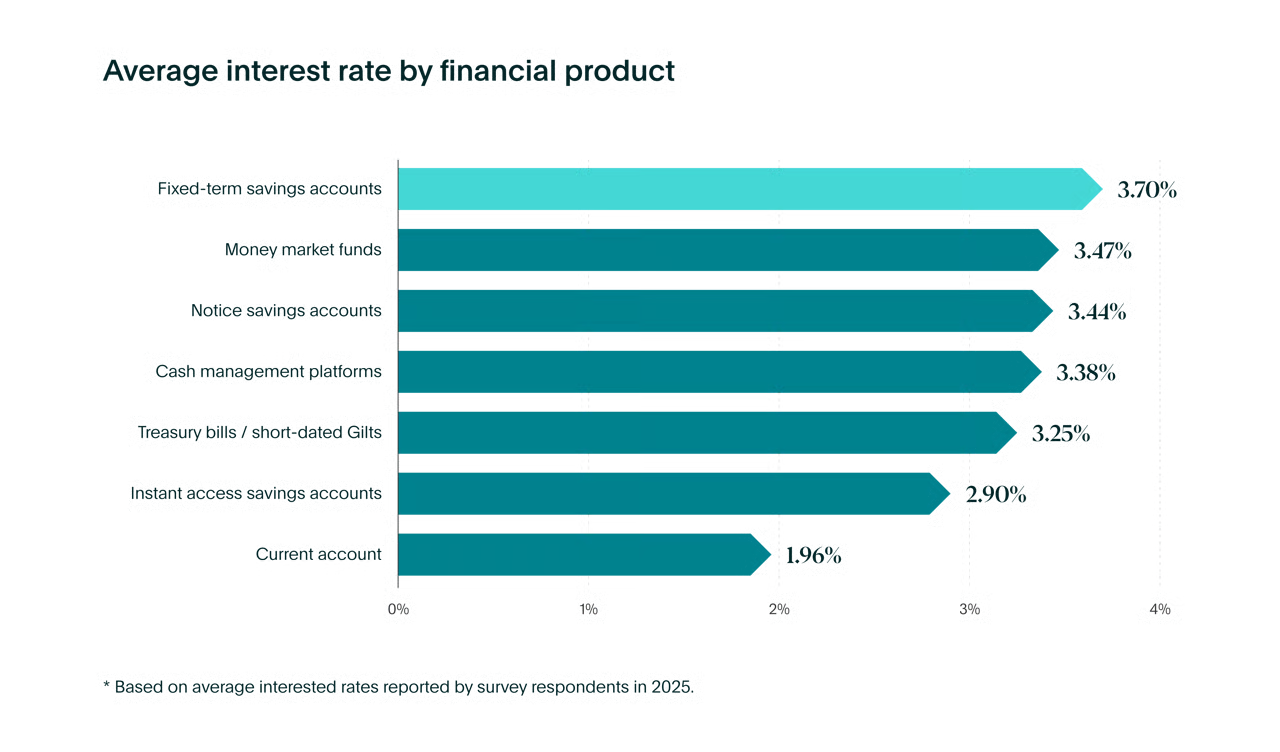
There’s a clear opportunity for SMEs to balance earnings and access more strategically. Accounts that limit access to funds generally offer better interest rates: fixed-term accounts could provide an average interest rate of 3.70%, compared with 1.96% for current accounts*. So, it’s worth considering what funds you could lock away to take advantage of potentially higher rates.
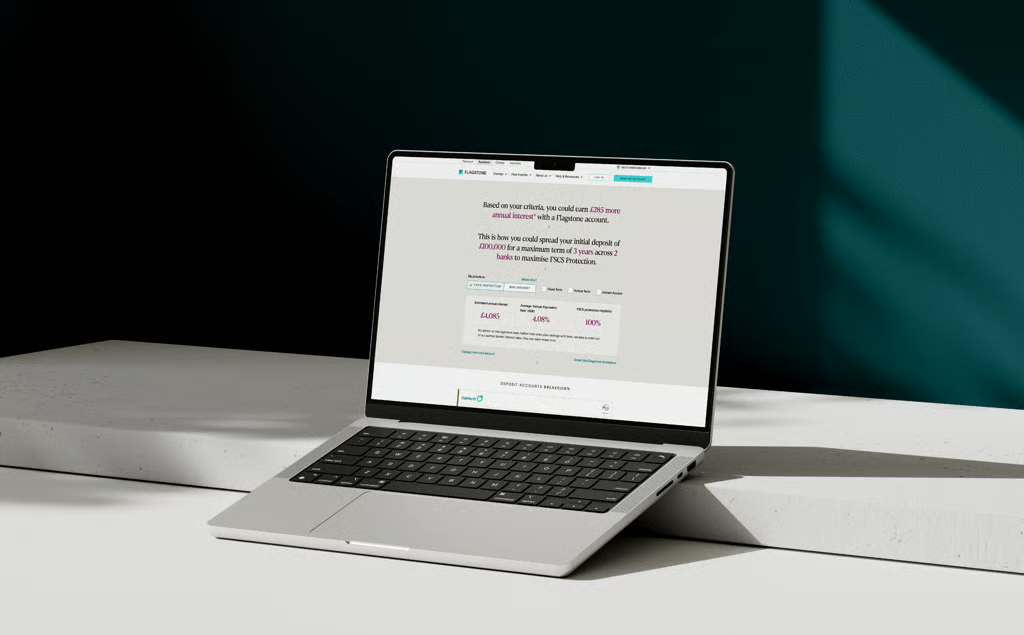
Cash management platforms let you open and manage multiple business savings accounts in one place, giving access to a range of competitive rates and account types. While only 23% of survey respondents use these platforms, more and more SMEs are moving more cash onto savings platforms as they look for safer, higher returns.
* Based on average interested rates reported by survey respondents in 2025.
CHAPTER THREE
The gap between monitoring and optimising surplus cash
Most SMEs track surplus cash returns and report them to leadership
Organisations pay close attention to how their cash is performing. 78% track the returns generated on surplus cash. Of these, 92% report performance to their board or executive leadership team.
As economic uncertainty continues to impact UK businesses, there’s an opportunity to monitor performance more regularly. Among those who track returns, 38% do so regularly and 41% occasionally. A similar pattern is seen in reporting, with 49% reporting regularly and 42% from time to time.
More regular monitoring and reporting would give finance leaders a more up-to-date view of performance, helping them respond faster to changing market conditions and make more confident decisions about how surplus cash is deployed.
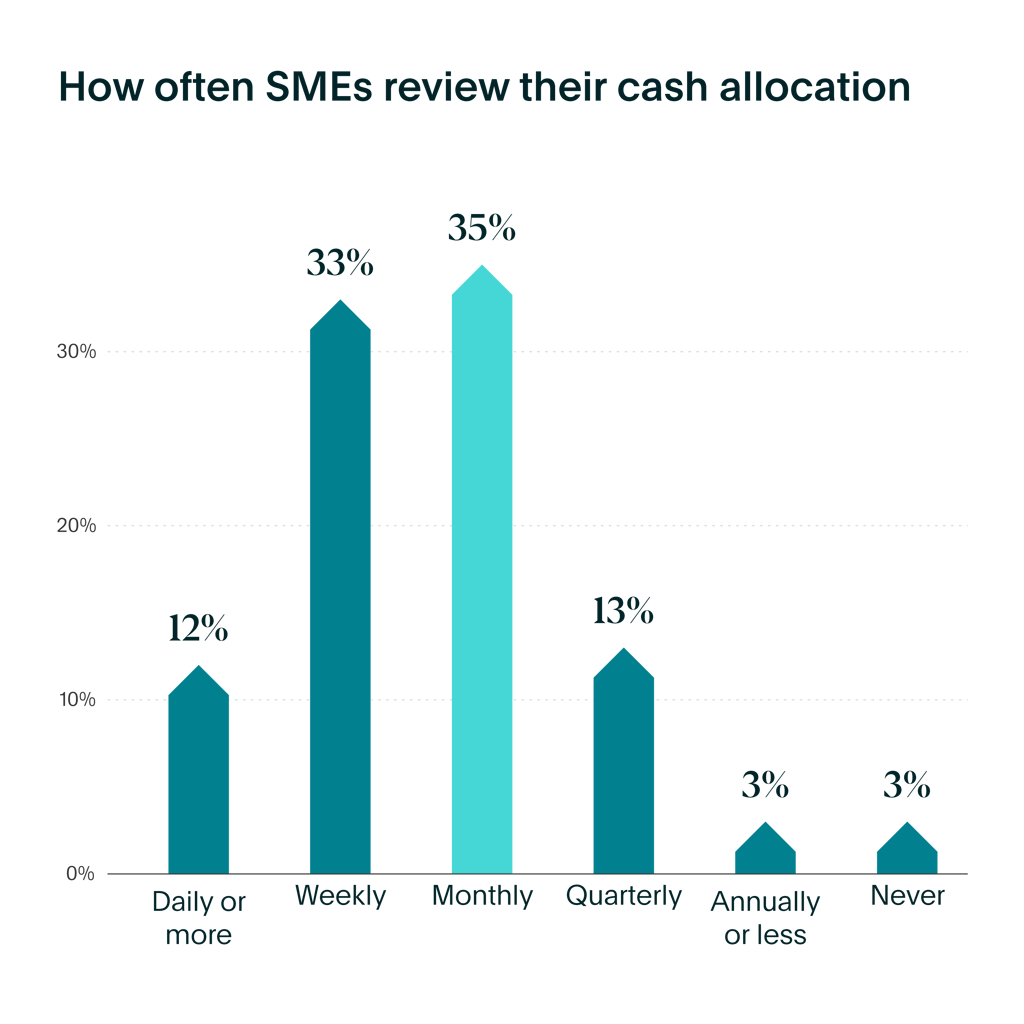
80% of organisations review their cash allocation at least monthly
Organisations frequently review where their cash is held. But this doesn’t always lead to moving funds where they could be earning more.
The majority of SMEs (80%) review how they allocate surplus cash across accounts and financial products at least monthly. Despite this, 64% of surplus cash sits in current accounts, which typically offer little or no interest.
If organisations are actively monitoring where surplus cash sits, why is so much money still underperforming?
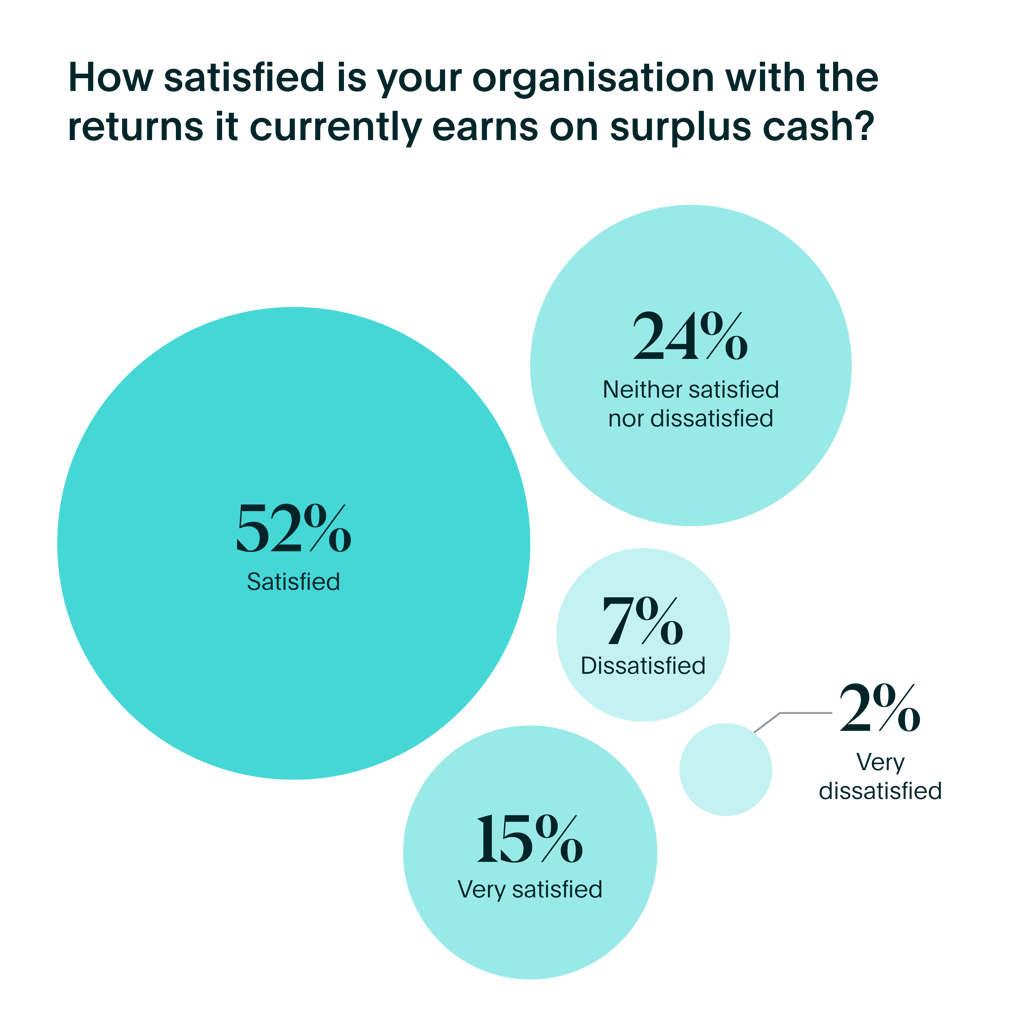
77% of SMEs are seeking better rates, but just 24% have acted
The study shows SMEs are aware their surplus cash could be earning more and that higher-yield options exist. But there’s a strong mismatch between seeking better rates and taking action.
77% of organisations have considered moving surplus cash to alternative accounts, platforms, or financial products to achieve better returns. Yet of these only 24% have followed through.
Despite showing intent, over half (53%) of organisations have not yet taken action to optimise returns on their surplus cash. So, what's holding them back?
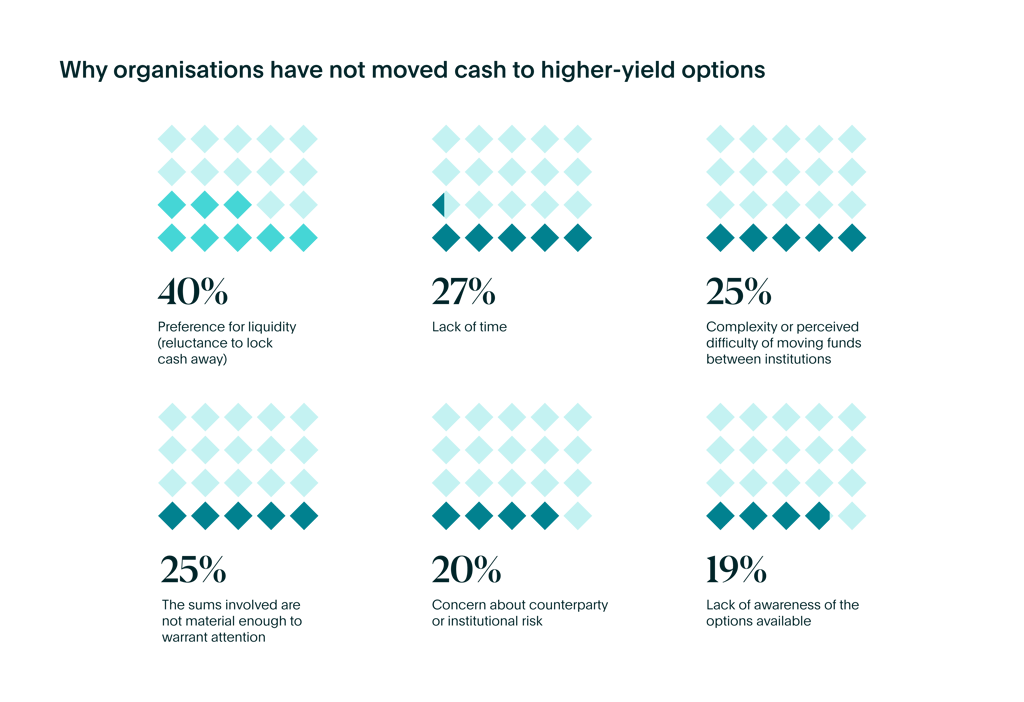
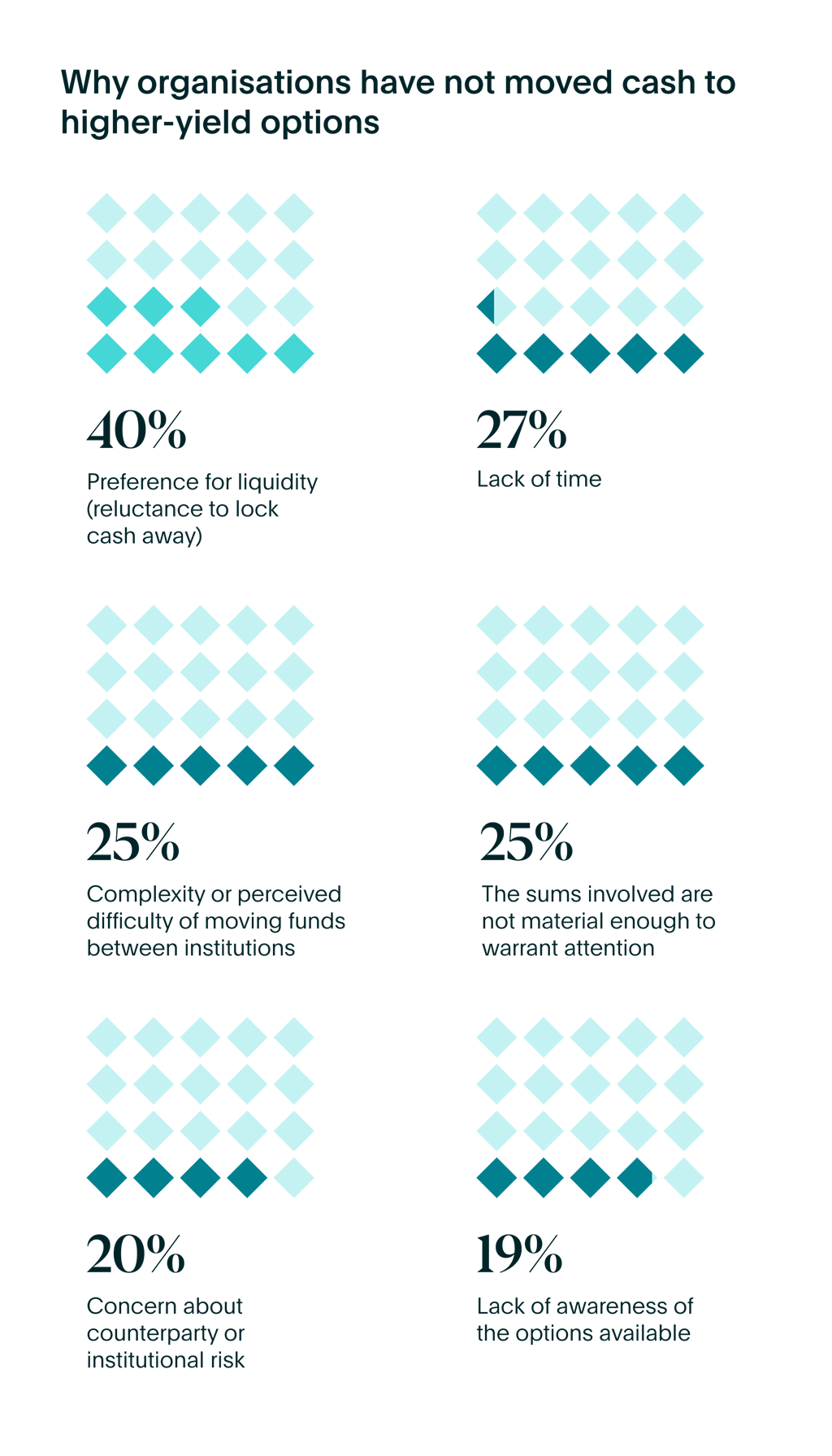
For 40% of survey respondents, preference for liquidity is the main reason for not moving cash to higher-yield solutions. This aligns with the fact that most survey respondents are holding their surplus cash in current accounts and instant access savings accounts.
Lack of time (27%) and perceived difficulty of moving funds between institutions (25%) are also common challenges. Only 19% say a lack of awareness is a barrier to improving returns on surplus cash, suggesting that savings inertia is not a knowledge gap, but a behavioural one.
From idle cash to business growth
When managed proactively, cash shifts from a static resource that risks losing value over time into a growth asset that strengthens business resilience and performance.
Our research highlights the scale of this opportunity: for SMEs, active cash management could unlock £18,000 in additional returns a year. But most organisations leave their cash sitting idle, missing out on returns that could otherwise be reinvested into the business.
To capture this value, ambitious finance leaders regularly review and allocate their surplus cash across multiple accounts to optimise returns while maintaining liquidity.
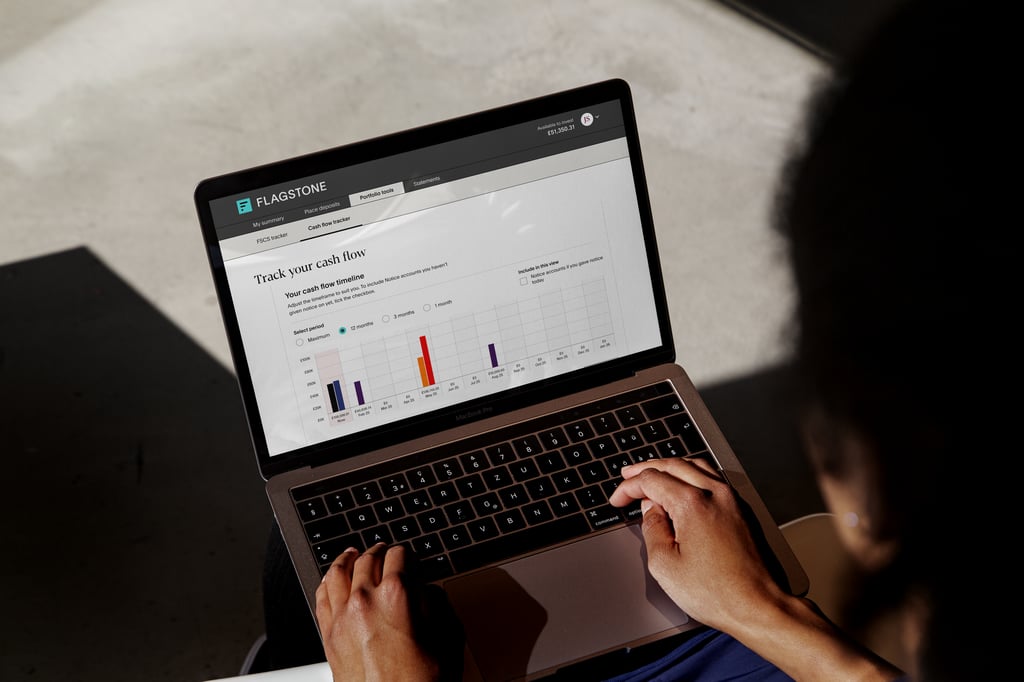
It’s time to demand more from your money. Cash savings platforms like Flagstone make it easy to open and manage multiple accounts in one place, so your business cash can deliver maximum value.
Methodology
In March 2026, Flagstone partnered with The Centre for Economics and Business Research (Cebr) and Yonder Data Solutions to conduct an online survey of 400 UK SME senior financial decision-makers to understand how firms manage surplus cash and the financial outcomes of different approaches.
Respondents were divided into three cash management categories: active, partially active, and passive.
The study compared average returns on surplus cash across the three groups, based on self-reported interest rates. It also controlled for firm turnover to ensure differences reflect savings behaviours rather than firm size. Economic modelling was then applied to estimate the financial impact of not actively managing surplus cash.
Finally, the opportunity cost of savings inertia was projected over five years under three scenarios: assuming returns remain constant, evolve in line with the Bank of England base rate forecasts, and followed past market rates.
For this report, surplus cash refers to funds that are not needed for day-to-day business activities, such as payroll and routine expenses.
An SME is defined as a business with fewer than 250 employees and a turnover of less than £50 million.
Organisations are classified as actively managing surplus cash if they meet all the following criteria. Firms that meet three of the four criteria are classified as partially active, while those meeting fewer are classified as passive.
They self-identify their cash management approach as ‘active’ or ‘highly active’ on a 1-to-5 scale
They deliberately segment cash into at least two of the following purposes: operational, buffer, or strategic
They hold a portion of cash outside of current account
They monitor and review cash allocations at least once a month
Audience insights
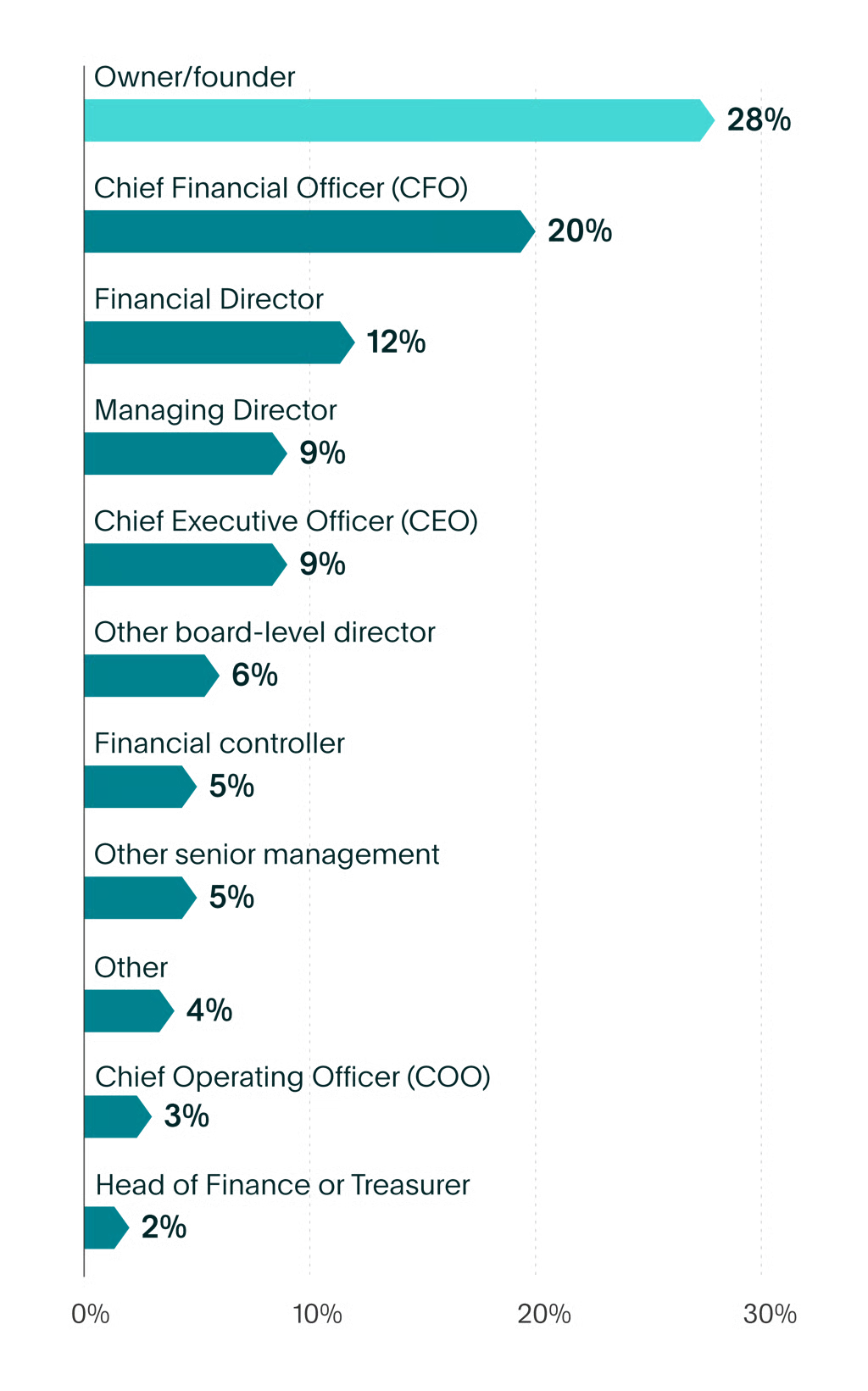
Which of the following best describes your job role?
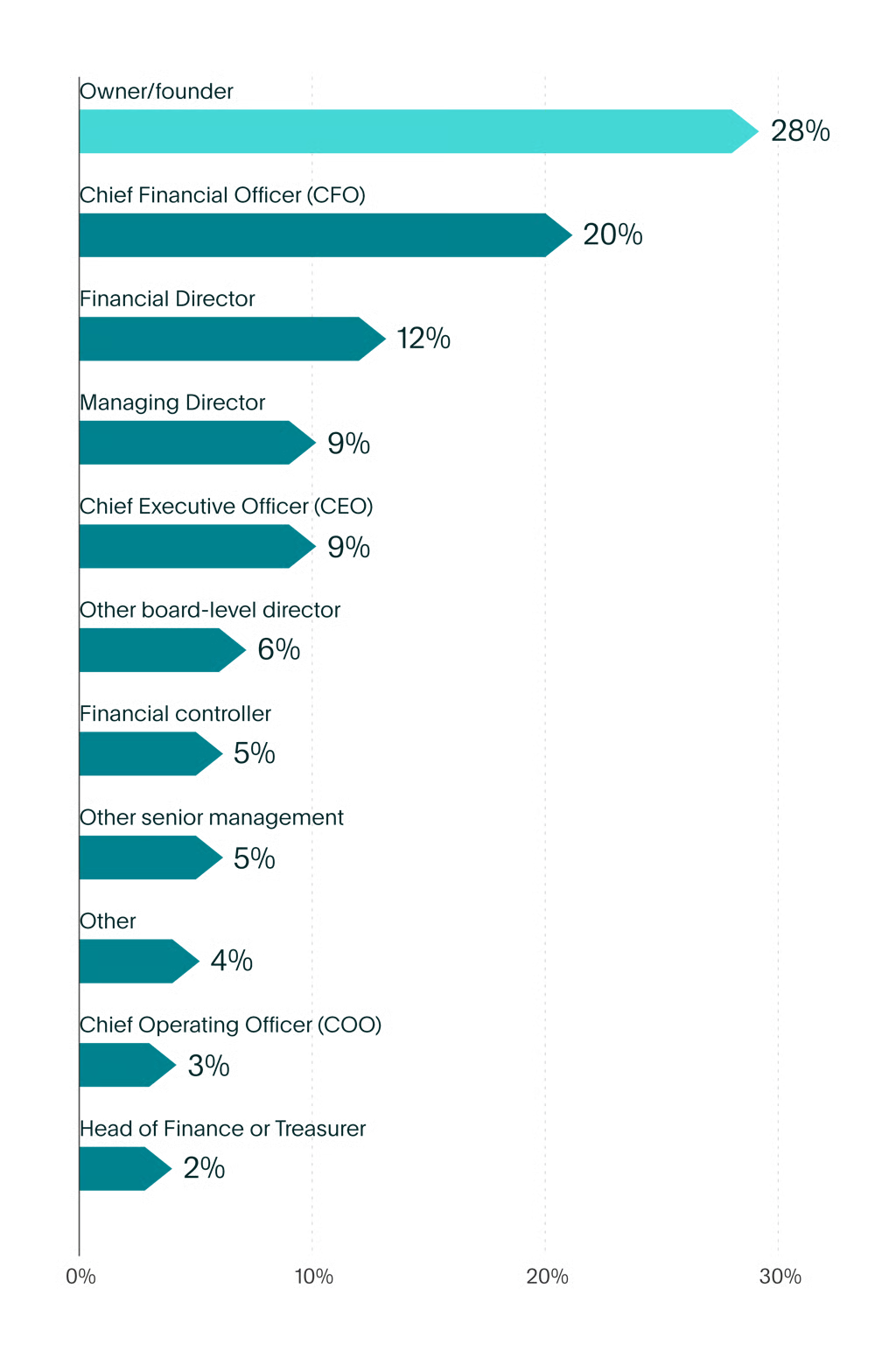
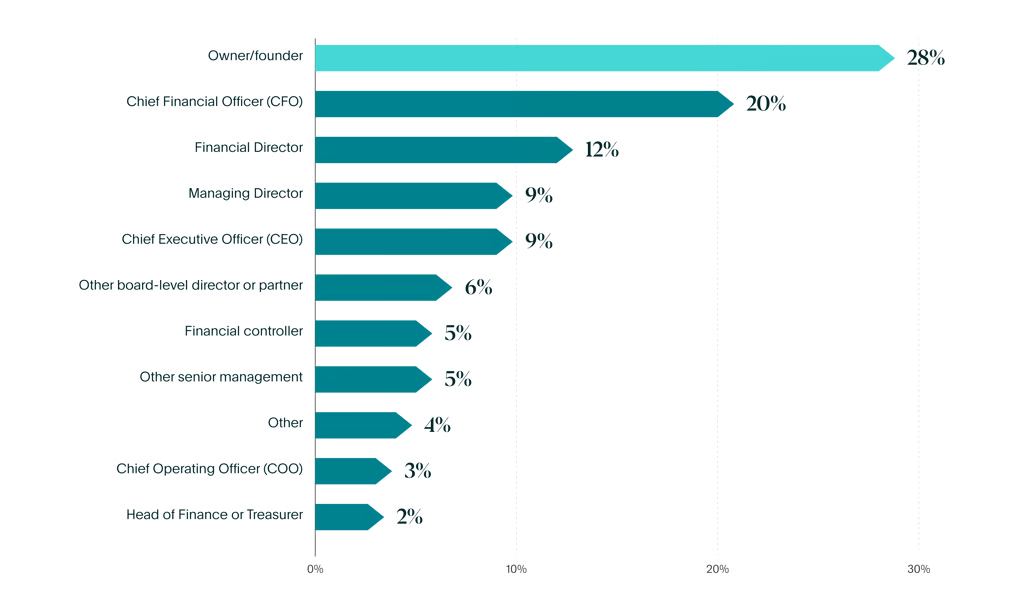
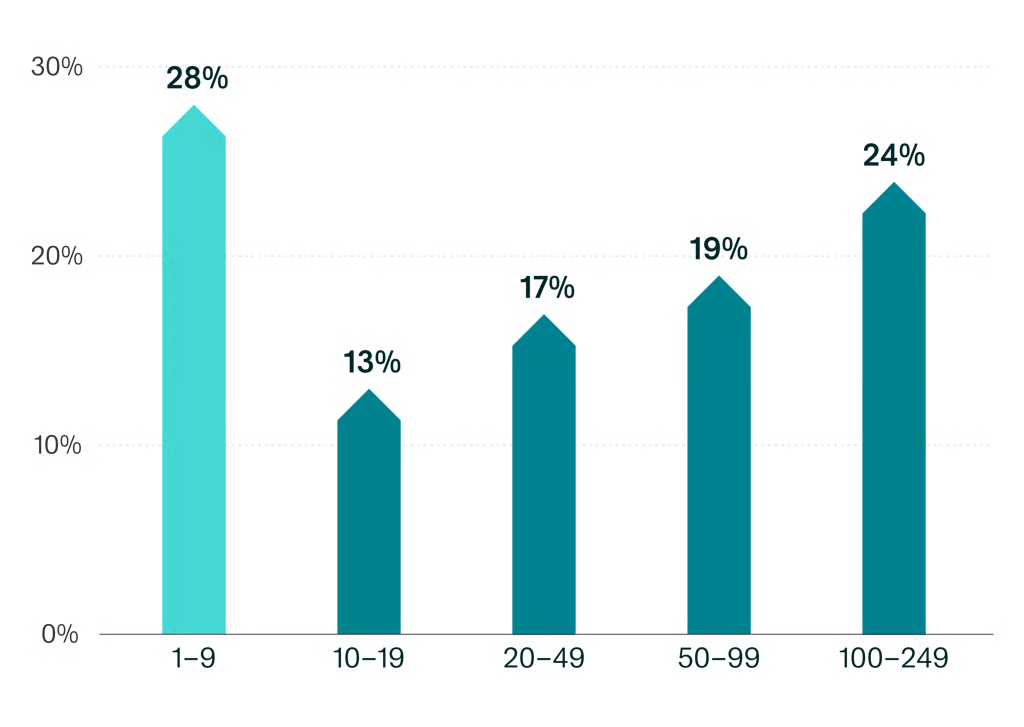
How many employees does your organisation currently have?
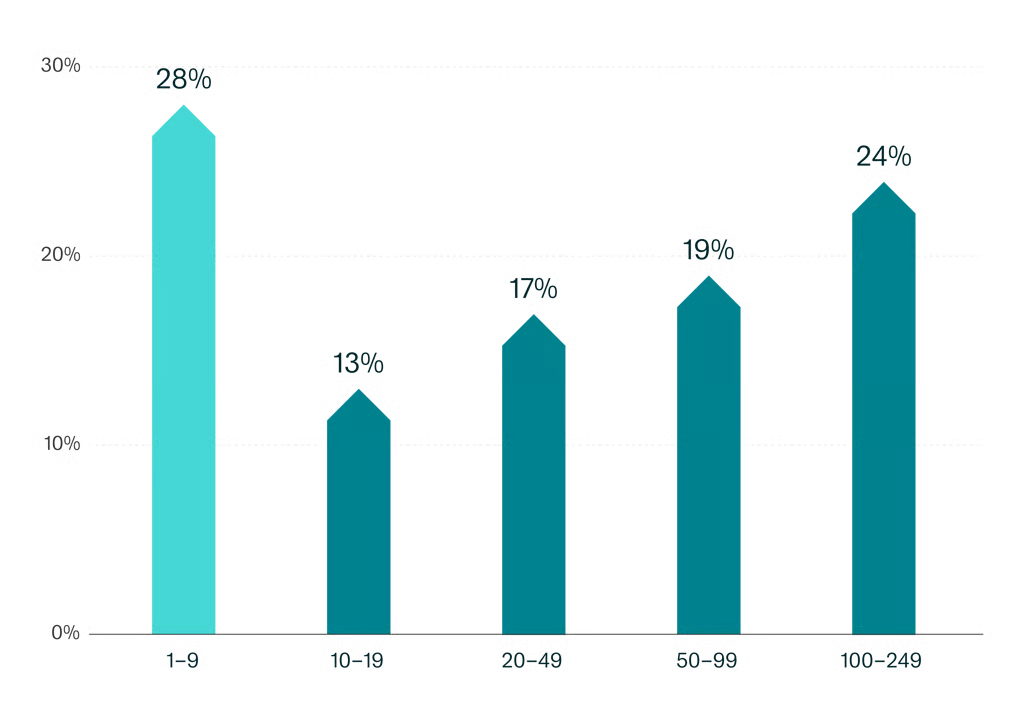
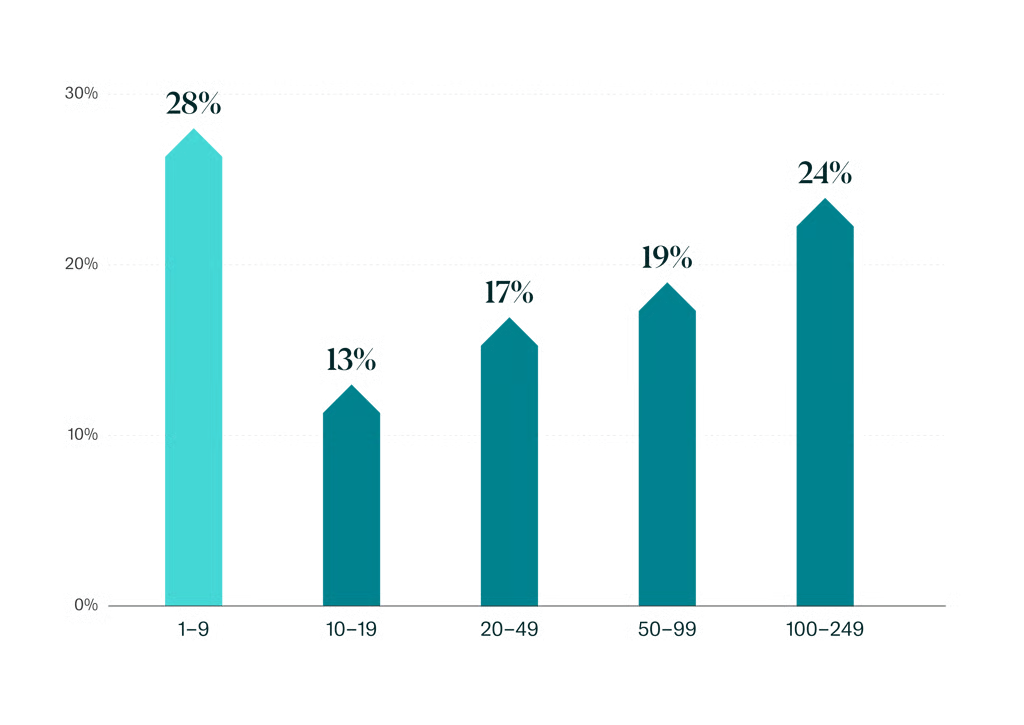
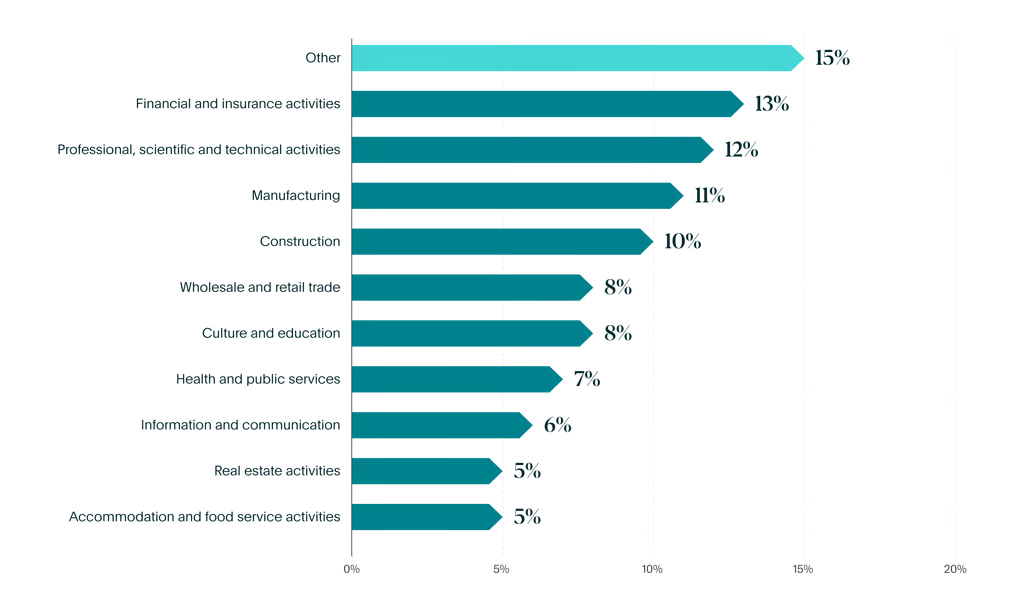
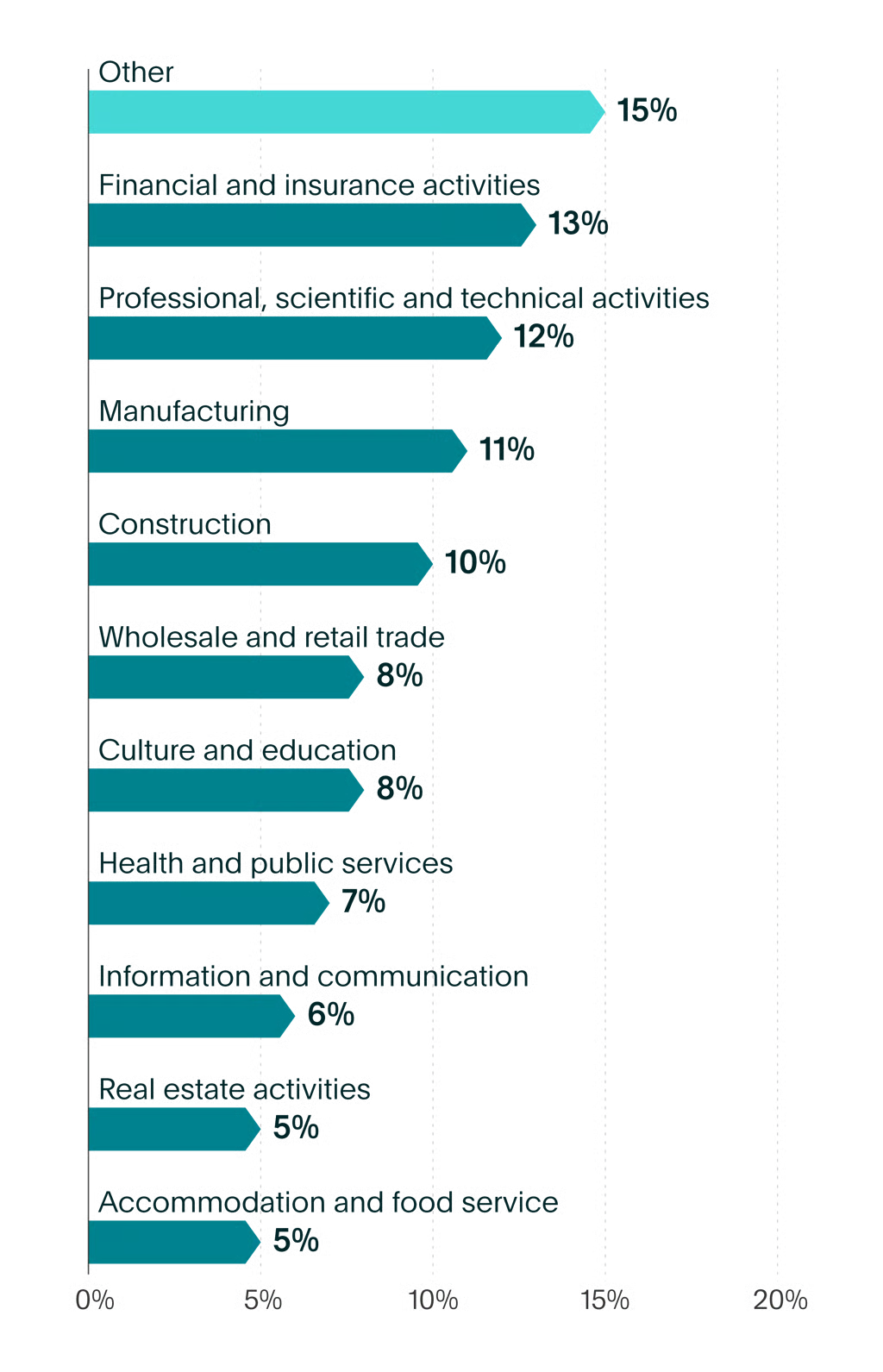
Which sector best describes your primary business activity?
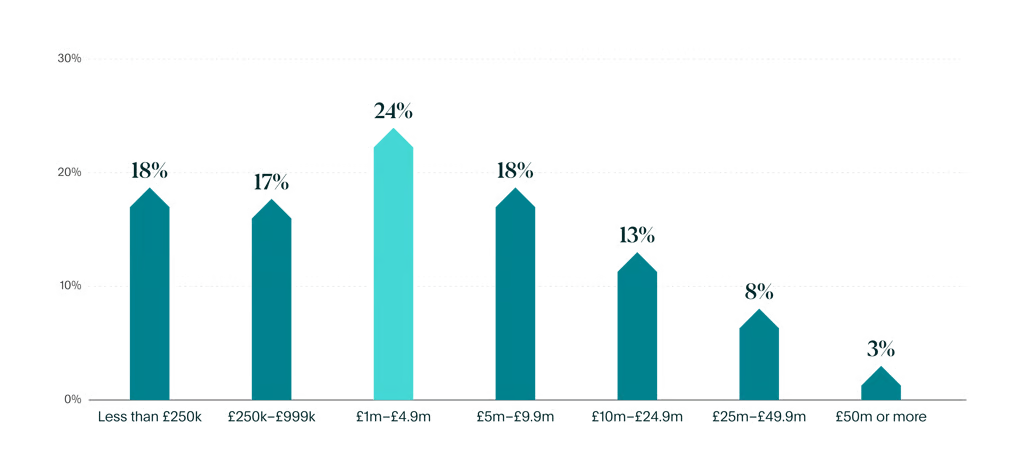
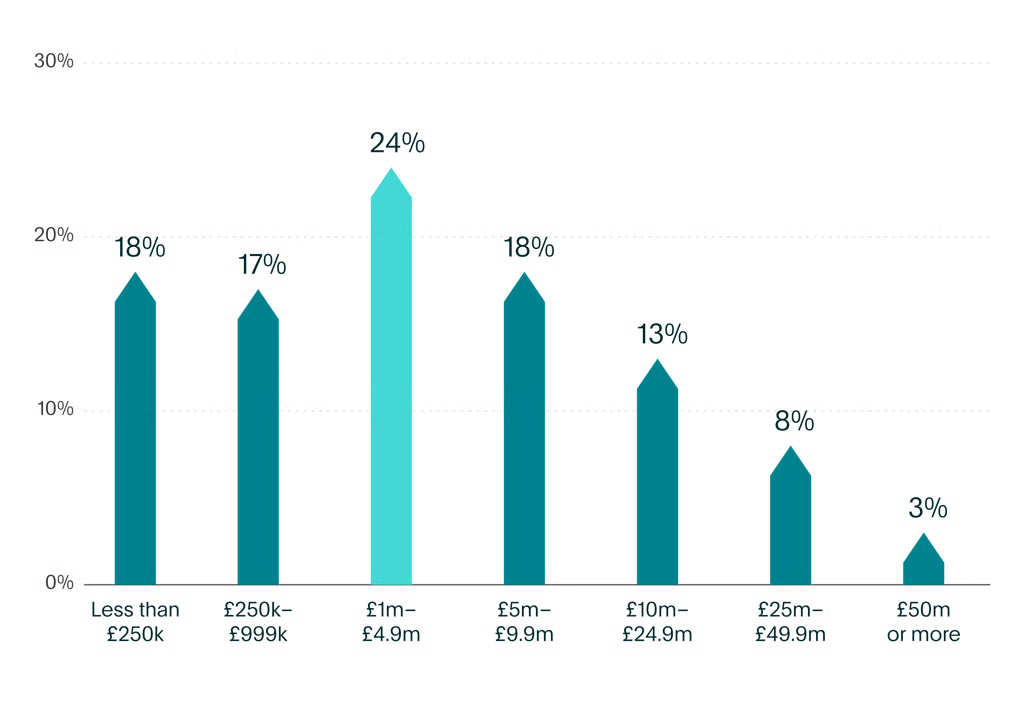
What was your organisation’s total turnover in the 2025 calendar year?
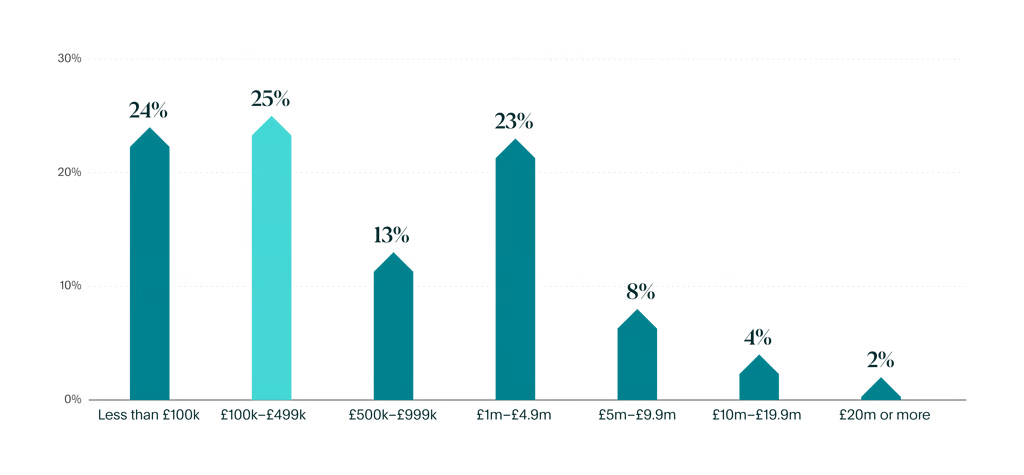
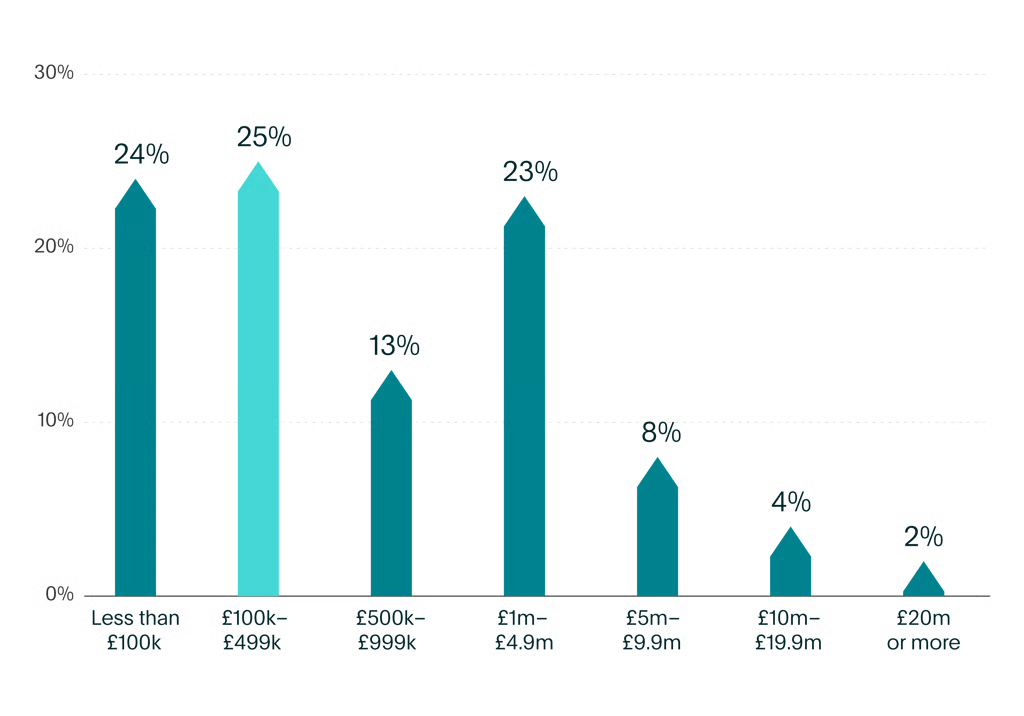
How much money does your organisation currently hold in cash deposits?
About Flagstone
Flagstone is the UK's leading cash platform for business – where you can spread, secure, and grow your reserves in one place. Diversify cash between accounts from 50+ FCA-regulated banks. All with one sign-up, and a minimum deposit of £100,000.