For Britain’s small and medium-sized businesses, there’s plenty to talk about. Ten years ago, Britain voted to leave the European Union. Since then, SMEs have navigated everything from Brexit itself and a global pandemic to an energy crisis and soaring inflation. Wars, tariffs, a cost-of-living squeeze, and repeated political change have piled on the pressure.
Yet SMEs remain the lifeblood of the UK economy. They employ almost 17 million people – that’s 60% of the private-sector workforce – and generate more than half of private-sector turnover. If the government wants to get Britain growing, these businesses need the confidence to invest, recruit, and expand.
So, after a decade of disruption, what’s holding businesses back today? And what do they want the new government to do about it?
We’ve been asking them. Our inaugural Business Barometer Report is the start of an annual commitment to Britain’s SMEs – listening to what businesses are telling us, tracking the challenges they face, and using those insights to push for positive change.
We surveyed 1,000 UK SME owners and senior financial decision-makers about the pressures they face, the impact on investment and growth, and what they need from government. The results suggest that while the crises have changed, the pressure on businesses has not.
The rising cost of doing business
When we asked SMEs which events had done the most damage to their financial health over the past decade, it was sustained economic shocks that stood out.
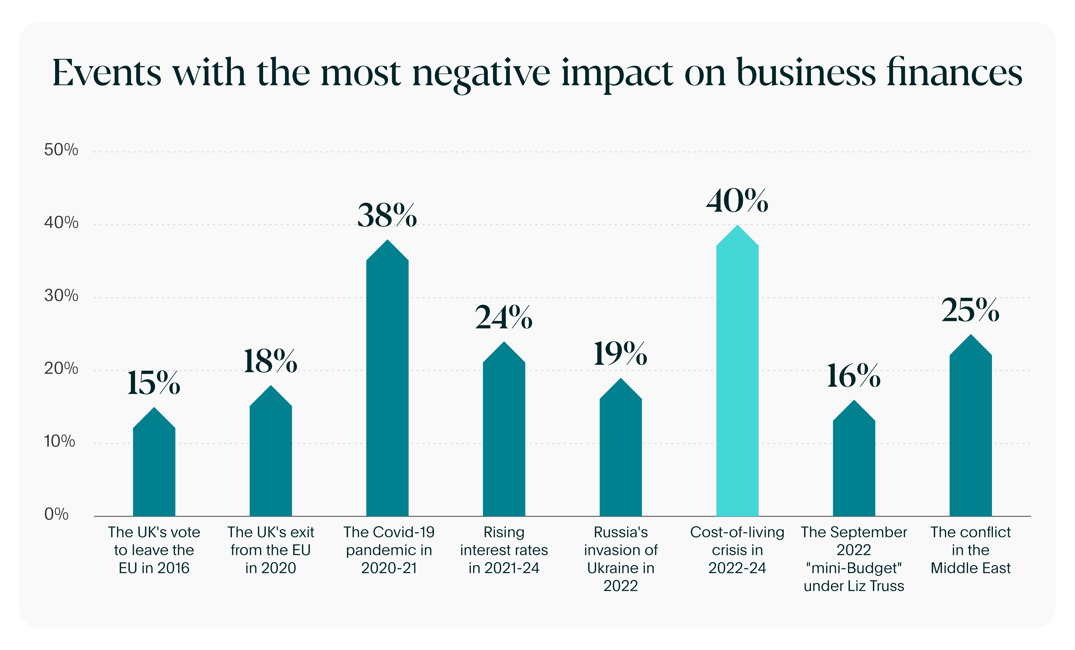
The cost-of-living crisis and the Covid-19 pandemic weighed particularly heavily. Brexit has created its own challenges, from higher import costs to supply-chain disruption and additional administration. Today, the concerns may have shifted, but businesses are still feeling squeezed from several directions.
As one business told us: ‘The economic climate makes it hard to earn what we use to. I’m now doing more, for less.’
Another described the challenge of rising costs while under pressure not to increase fees: 'Higher wages need to be funded, but customers may not be willing to absorb higher prices.'
Energy is a recurring concern. One business told us fuel was now its biggest cost: 'Energy prices are the most significant challenge. We either have to absorb these or pass them on to customers and risk losing business.' Another said, 'The fact that the government is raising minimum wage and not capping energy prices means money is coming out of businesses who cannot afford to burden the cost.'
What does this mean for growth?
Our research suggests some SMEs are already responding to today’s pressures by reducing recruitment, cutting costs, and delaying investment and strategic decisions.
But there’s a flipside to the story. When we asked what businesses would do if today’s challenges were resolved, many pointed straight back towards growth: hiring people, investing in equipment and technology, expanding into new markets, and developing their workforce.
In other words, the ambition to grow is there. The question is whether businesses have the confidence and conditions to act on it.
For a government promising stronger economic growth, these insights are telling. Growth happens when a manufacturer buys new machinery. When an entrepreneur enters a new market. And when a business owner feels confident enough about the future to take on another employee.
It was revealing that, among SMEs worried about economic uncertainty, 55% cited UK political instability and leadership changes as their biggest concern. After a decade of disruption, stability at home matters more than ever.
What do SMEs want from government?
Andy Burnham’s summer listening tour came at a pivotal moment. Businesses can take steps themselves to build financial resilience, from controlling costs to managing cash reserves more actively. Using a three-tier cash framework can help businesses balance the funds they need for day-to-day operations and unexpected costs with money set aside for future investment and growth.
But businesses cannot control energy markets, tax policy, or the wider economic environment. These are some of the biggest barriers to growth and require action from government.
Flagstone started as a small business and understands firsthand the challenge of turning an ambitious idea into a growing company. That's why we want to use our experience and voice to put SMEs higher up the policy agenda – and why our Business Barometer is designed to be more than a snapshot of business sentiment.
Turning insights into action
SMEs are the lifeblood of the UK economy and are ready to grow. The government needs to give them the confidence and conditions to do so because when small businesses thrive, Britain thrives.
We asked SMEs what government could do to make the biggest difference to their businesses. Based on our research, these are the three most important actions the government could take to support small UK business resilience and success.
1. Cut the cost of hiring
Reversing all or part of the National Insurance Contributions rise would give businesses vital breathing room to recruit, reward, and retain staff – and invest in future growth.
2. Bring down energy bills
Energy is an unavoidable and unpredictable cost for many businesses. Firms are asking for greater support and measures that offer more protection from extreme energy price shocks.
3. Fix business rates
Business rates should support thriving high streets and growing businesses, not make taking the next step more expensive. A more responsive system, alongside a higher Small Business Rates Relief threshold, could bring more firms into relief and leave SMEs with more money to reinvest, create jobs, and strengthen their local economies.
Make your voice heard
We'd love to hear directly from UK SMEs about how you're navigating the current financial environment. If you're interested in sharing your story as part of a future case study, get in touch below.
Build high-yield cash reserves across multiple banks with Flagstone
Amid economic and political uncertainty, businesses like yours need flexibility and access to competitive rates.
Spread, protect, and grow your company's cash with Flagstone. Access 50+ FCA-regulated banks and hundreds of savings accounts, all with one sign-up and a minimum deposit of £100,000. Trusted by 10,000 business leaders.